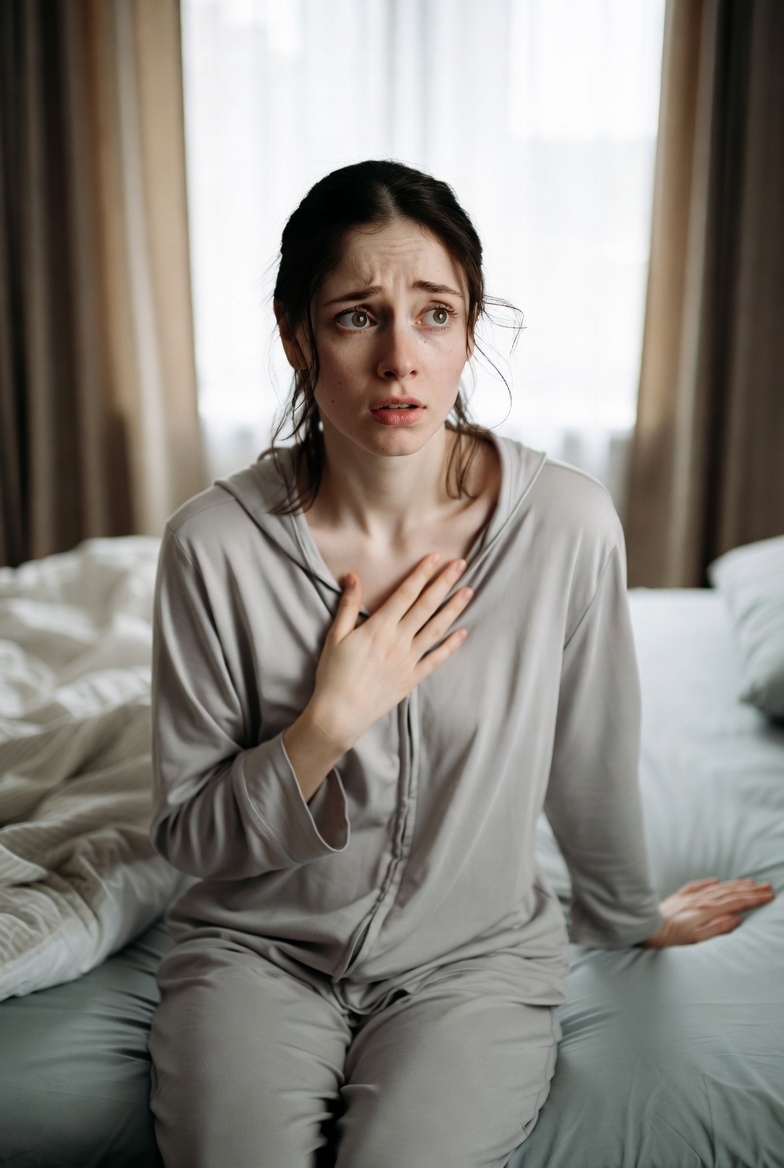
Caffeine is the most widely used psychoactive drug in the world and the one we pretend isn't a drug. Most of us consume it in a ritual — morning mug, mid-morning top-up, post-lunch pick-me-up — without ever counting what we're actually taking in. For most people that's fine. For people with anxiety, it is one of the most common, most overlooked, and most reversible amplifiers of the symptoms they are trying to reduce.
This is not a "quit caffeine" article. An early-morning coffee is a perfectly reasonable thing to have, and for most anxious people, complete abstinence is overkill. The useful question is different: how much, and when, is actually too much for you specifically?
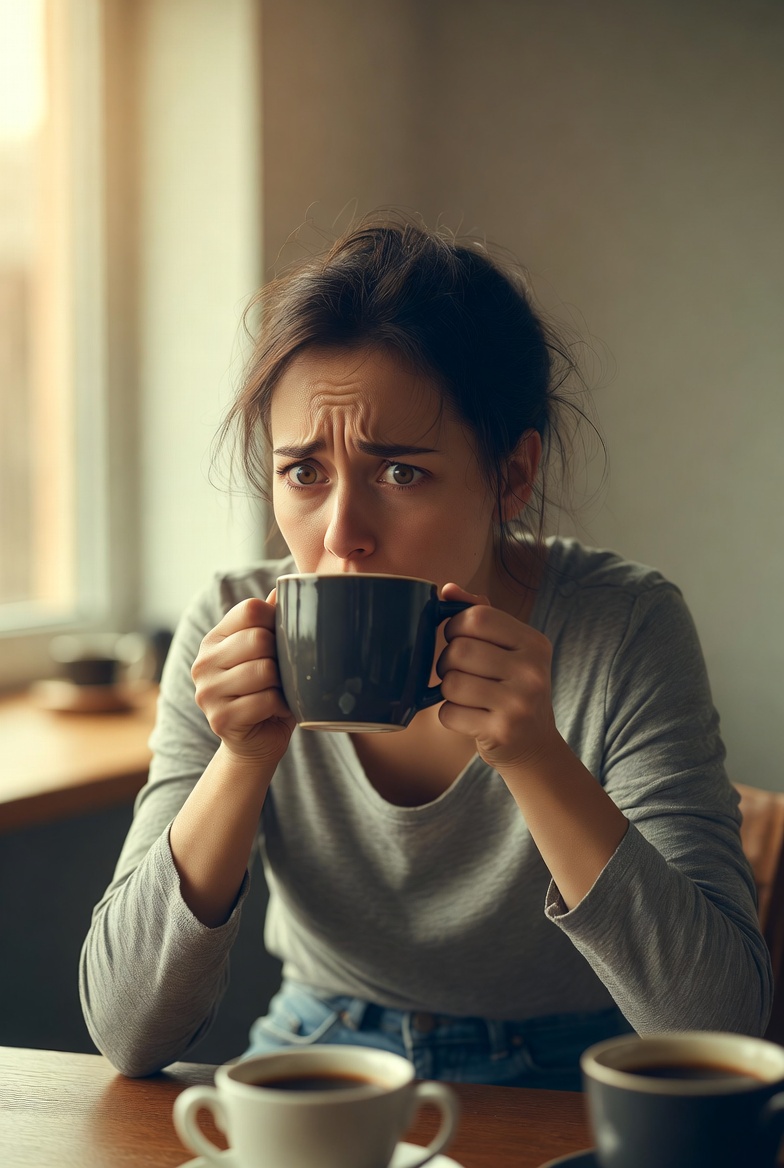
Sources: US FDA; EFSA (2015); Nardi et al. panic provocation studies; Drake et al. caffeine & sleep.
What caffeine actually does to your brain
Caffeine works primarily by blocking adenosine — the chemical that accumulates in your brain during the day and makes you feel sleepy. With adenosine blocked, you feel more alert. So far, so good. But caffeine doesn't stop there. It also increases adrenaline release, raises cortisol, elevates heart rate, tightens blood vessels, and activates exactly the same sympathetic nervous system responses as anxiety itself.
For a well-regulated nervous system, that activation is mild and useful. For an already-primed anxious one, it is kerosene on a fire. The physical sensations produced by caffeine — racing heart, jitters, shallow breathing, restlessness — are almost identical to the sensations of early-stage anxiety. Your brain, scanning for reasons to feel uneasy, finds them in its own chest. The caffeine becomes the trigger the anxiety was looking for.
The tipping point
Research on caffeine and anxiety points to surprisingly consistent thresholds, though individual variation is huge. For most healthy adults, meaningful anxiety effects appear around 200-400mg per day — the FDA and EFSA both use 400mg as the upper safe limit. For people with existing anxiety disorders, the threshold is often much lower: 100-200mg is enough to push many anxious systems into trouble. And for people with panic disorder specifically, caffeine can directly trigger panic attacks at doses equivalent to 3-4 cups of coffee.
Timing matters almost as much as dose. Caffeine has a half-life of about five hours, which means a 200mg coffee at 2pm still has 100mg active at 7pm and 50mg at midnight. This is why afternoon coffee reliably disrupts sleep architecture even when you don't feel wired — and disrupted sleep, the following day, is one of the single strongest amplifiers of anxiety there is.
Work out your daily total
The best way to see whether caffeine is contributing to your anxiety is to actually count. Most people dramatically underestimate their intake, partly because we don't tend to think about tea, chocolate, energy drinks, or pre-workout supplements as "caffeine". Tap through whatever you've had today.
Daily caffeine calculator
Tap + for each drink you've had today. Runs entirely in your browser.
Caffeine content figures are averages — actual content varies by bean, brew time, cup size, and brand. Not a medical tool.
The loop that makes it worse
The specific trap with caffeine and anxiety is that the symptom it produces is the symptom you reach for caffeine to avoid. Anxious people tend to sleep badly. They wake up tired. Tired people drink coffee. Coffee amplifies anxiety. Amplified anxiety worsens sleep. And the loop runs for years, invisibly, presented to yourself as "I just need my morning coffee to function."
The caffeine-anxiety-sleep loop
Why reaching for coffee to fix anxious fatigue is self-reinforcing
Why anxious people should be extra careful
Genetic variation makes a bigger difference here than most people realise. The enzyme that metabolises caffeine — CYP1A2 — comes in fast and slow variants. Fast metabolisers clear caffeine in under three hours and can drink it at almost any hour. Slow metabolisers — which includes approximately half the adult population, and which includes pregnancy and some common medications including the contraceptive pill — can still have meaningful caffeine in their system seven or eight hours after their last cup. There is no easy test for which camp you are in. The tell is whether evening coffee affects your sleep. If yes, you're probably slow.
There is also a specific adenosine-receptor genetic variant (ADORA2A) associated with caffeine-induced anxiety. People with this variant experience more anxiety from the same dose. You may already be this person — the one friend who says "I can't drink coffee, it makes me weird" — or you may be them without realising it. If caffeine reliably makes you feel jittery or on edge even at modest doses, that's your nervous system telling you something real.
Quitting vs cutting down
"I'll quit tomorrow. Cold turkey. Just muscle through the first week."
Cold turkey produces genuine withdrawal — headaches peaking at 24-48 hours, fatigue, low mood, sometimes flu-like symptoms for 5-9 days. Most people give up on day three and conclude they can't live without it, when actually they just underestimated the withdrawal.
"I'll halve my intake this week, halve it again next week, and see how I feel after two weeks at low levels."
Gradual reduction mostly avoids withdrawal. Gives your adenosine receptors time to down-regulate. Lets you see the actual effect on anxiety rather than the confounding effect of withdrawal. Most anxious people find a sustainable new normal at 100-200mg.
A useful two-week experiment
If your daily total is over 200mg and you have ongoing anxiety, here is a specific, low-effort experiment worth running: spend two weeks deliberately under 100mg per day — one morning coffee, nothing after 10am, no energy drinks or pre-workout. Not forever. Just two weeks, to see.
The first five days will probably feel worse, not better. That is withdrawal, not the real signal. By day seven or eight, most anxious people notice something different: less afternoon jittering, easier evening wind-down, better sleep, and — often — a meaningful drop in background anxiety that had become so normal they'd stopped noticing it was there.
At the end of two weeks, you have real data about your own system. You can keep the change, modify it, or go back. What you can't do any more is assume the caffeine is unrelated. For some people it is. For anxious people, it usually isn't.
The sentence worth carrying: caffeine is not evil, but for an anxious brain, it is a load-bearing variable most people never test. Two weeks is enough to find out whether it is one of yours.