Home Learn How it worksTechniquesPricing Case StudiesBlogContact LoginStart free →
Modern Anxiety7 min read · April 2026

Phone Call Anxiety: Why a 30-Second Call Can Ruin Your Morning

You would genuinely rather drive across town than make a five-minute call. You rehearse the sentences, watch the phone ring out, and feel an absurd wave of relief when it goes to voicemail. This is not laziness, not rudeness, and not a personality flaw — it is a specific, well-recognised subtype of social anxiety that is rising fast in people under 40. Here is why, what actually helps, and a prep tool you can use before your next call.

There is a small but unmistakable experience that a large proportion of adults under 40 know intimately. A phone number appears on your screen — a GP's office, an estate agent, a plumber, your mother — and before you have consciously decided anything, your heart rate has climbed, your palms are slightly damp, and there is a specific sinking feeling in your stomach. You watch the phone ring, fingers hovering. Sometimes you pick up. Sometimes you let it go to voicemail and spend the next twenty minutes deciding whether to call back.

You are not alone, you are not lazy, and you are definitely not the first person this has happened to. Phone call anxiety is a genuine, recognised anxiety subtype. It is getting more common. It is treatable. And most importantly, it is one of the most responsive patterns in CBT — a few weeks of deliberate work often produces substantial change.
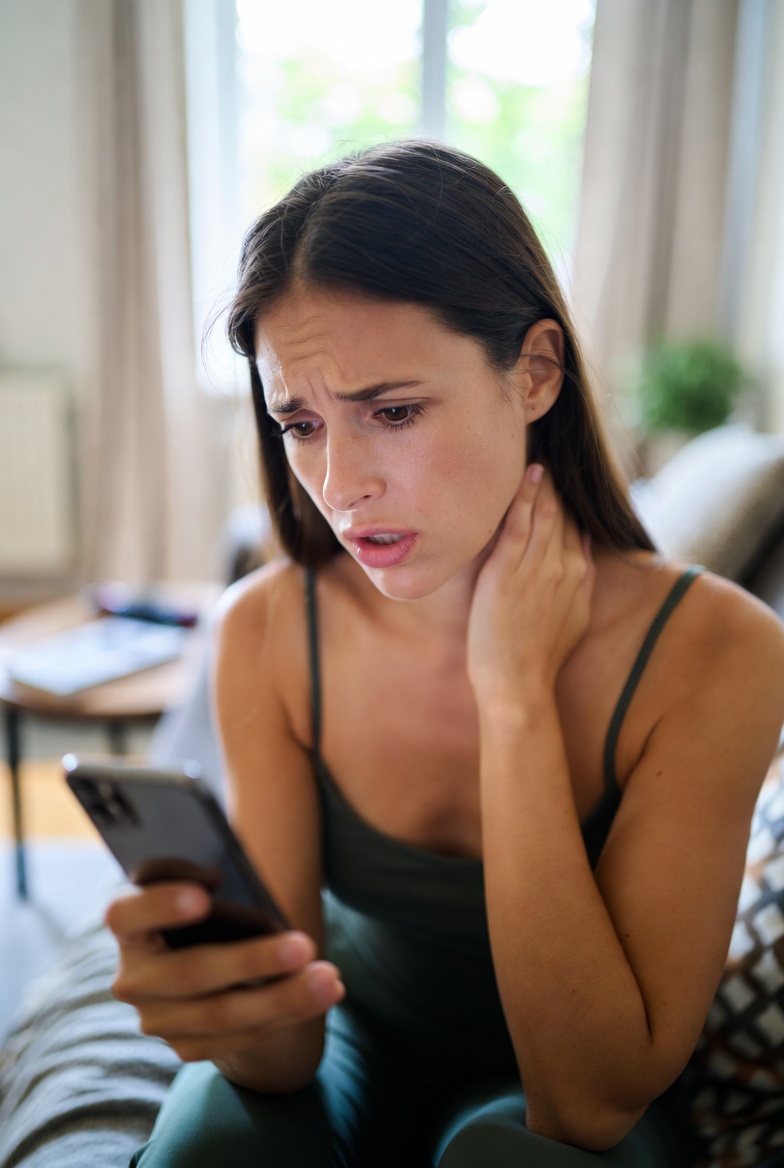
Phone call anxiety — Stop The Loop blog
The dread is real. The avoidance makes it worse. The fix is specific.
~76%Of UK adults under 40 report some anxiety about phone calls (UK surveys)
~12%Lifetime prevalence of social anxiety disorder — of which phone anxiety is a common subtype
4–8 wksTypical CBT response time for targeted phone anxiety work

Sources: UK telecoms surveys (Bupa, BT/OpenReach); Kessler et al. social anxiety prevalence; NICE CG159.

What phone call anxiety actually is

Phone call anxiety — historically called telephone apprehension or telephonophobia in the older literature — is a specific cognitive and physiological response to making or receiving phone calls. It sits under the broader umbrella of social anxiety, but it has features that make it distinct.

Unlike general social anxiety, phone anxiety can coexist perfectly comfortably with being confident in person, in groups, on video calls, and in written communication. Many people who find phone calls excruciating are articulate, charming, and socially easy elsewhere. The common element is not "being around people." It is the specific combination of real-time, audio-only, uneditable interaction with unpredictable length and content — and for a particular kind of brain, that combination is genuinely harder than any other mode of communication.

Why it is getting worse

Phone anxiety used to be a minority experience for older generations. For millennials and Gen Z, it is close to a majority one. The reason is not generational weakness — it is a genuine shift in how social interaction works, and the pattern is entirely predictable.

Phone anxiety by age group (UK)

Proportion reporting they find phone calls uncomfortable or avoid them when possible

Under 30
82%
30–39
70%
40–49
54%
50–59
38%
60+
26%

Composite of UK telecoms and wellbeing surveys — illustrative, not a single study.

Anyone who grew up with texting, messaging, and email has simply made fewer casual phone calls than their parents did. Text communication allows editing, delay, re-reading, and checking the other person's response before replying. Phone calls allow none of this. A generation accustomed to asynchronous, editable communication is suddenly asked to perform live, in real time, with no safety net. Less practice, less confidence, more anxiety — exactly what you would predict.

Why phones specifically trigger anxiety

Three features of phone calls combine to make them uniquely anxiety-producing, particularly for people who already lean anxious.

First, no visual cues. Humans rely heavily on facial expressions and body language to know how a conversation is going. Without them, your brain has to work harder to interpret tone, pauses, and intent — and for anxious brains, that ambiguity gets interpreted as potential threat. Silence in a phone call feels much louder than silence in person, because there is nothing else happening to fill it.

Second, no edit button. Every other form of modern communication — text, email, voice note — allows you to draft, revise, and send only when you are ready. Phone calls are produced live, and whatever leaves your mouth is what the other person heard. For anyone with perfectionist tendencies, this is a specific kind of torture.

Third, unpredictable length and content. A text exchange has clear natural pauses. A phone call keeps going until someone ends it, and both parties are hyper-aware of awkward silences. You don't know how long it will take. You don't know what they will ask. You don't know whether they are having a bad day. The uncertainty itself is the fuel.

The avoidance cycle

What happens after the first few avoided calls is predictable and important to understand. Avoidance feels like relief — the call didn't happen, the anxiety went away — but every avoided call teaches the brain that phone calls are dangerous enough to avoid. The next call feels harder, so you avoid it, so the next one feels harder still. This is the classic anxiety maintenance pattern, and it works exactly the same here as in any other anxiety disorder.

The phone avoidance cycle

Why "I'll just text them instead" makes next week's call harder

Step 1
Call needed
A practical task requires a phone call
Step 2
Anxiety spike
Dread, rehearsing, physical tension
Step 3
Avoid or text
Find a workaround — relief
Step 4
Skill fades
Less practice, less confidence
Loop
Worse next time
The next call feels even bigger

What actually helps

What doesn't work

"I'll just push through. I need to stop being so weird about this. Other people don't think about it, so I shouldn't either."

Willpower without skill-building produces the same dread on the next call. Shame adds to the anxiety rather than reducing it. Comparing yourself to people who don't have this pattern is not a strategy — it's a self-criticism loop dressed up as motivation.

What does work

"I'll prepare in advance, start with small calls, and stop avoiding. The anxiety might not leave immediately, but my confidence will catch up."

Preparation reduces uncertainty (the main fuel). Graded exposure rebuilds the skill that avoidance has eroded. Confidence follows competence, not the other way round. Most phone anxiety responds substantially to this pattern within weeks.

Prep kills half the anxiety

If you do only one thing about phone anxiety, make it this: never go into a call unprepared. The anxiety feeds on uncertainty, and a two-minute prep removes most of the uncertainty. Use the tool below for your next call.

Pre-Call Prep Card

Four quick questions. Get a structured card to glance at while dialling.

Nothing saved. Nothing sent. Runs entirely in your browser.

Your prep card
Opening line
What you want from this call
They might ask
Closing line
Before you dial
  • Stand up — it genuinely improves your voice and reduces anxiety
  • Three slow out-breaths through pursed lips, 6 seconds each
  • Smile while you dial — it carries through the voice
  • Keep this card on screen or print it; glance at it if you get stuck

Practice on small calls

Preparation helps, but the other essential ingredient is deliberate, graded practice on calls that don't matter much. The point is not to eliminate anxiety. It is to rebuild the basic skill that avoidance has eroded, starting with calls so small that failure literally doesn't matter.

The phone anxiety ladder

Work up from easier to harder. Do one new level per week.

1
Order takeaway by phoneLow stakes, short, transactional. Start here.
2
Call a shop to check stock or opening hoursUnder 90 seconds. No personal info needed.
3
Book a hair, dentist, or GP appointmentSlightly longer. Gives you a real win to point to.
4
Call a utility or service provider about a small issueBill query, broadband speed, simple admin.
5
Call a family member or friend for 10 minutes, on purposeRe-introduces social calls without pressure.
6
Call about something slightly harder — a complaint, a negotiationNow you have real evidence calls usually go fine.
7
Make unscripted work calls or pick up unknown numbersThe skill is back. The dread is optional now.

The sentence worth carrying: phone anxiety is maintained by avoidance and dissolved by preparation plus small, deliberate practice. You do not need to enjoy calls. You just need to be able to make them when your life requires one.

When it's time to get help

If phone anxiety is affecting your work, your ability to handle basic admin, or your relationships — if you have missed medical appointments, declined job opportunities, or accepted worse outcomes because a call felt impossible — it is worth speaking to someone. NHS Talking Therapies offers CBT with self-referral in most UK regions; phone anxiety is one of the patterns that responds fastest. You do not need to meet the formal diagnostic criteria for social anxiety disorder to benefit. Most people who get targeted help for this pattern report significant improvement within a handful of sessions.

For the calls you keep putting off.

Stop The Loop's CBT sessions include specific exposure-based exercises for phone anxiety — plus breathing, grounding, and mood timeline to track the progress as your confidence rebuilds. Five minutes a day. Self-guided. Free to start.

Try it free →
Free tier · No credit card · Cancel anytime

Frequently asked questions

Is phone call anxiety a real thing?

+

Yes. Phone call anxiety — sometimes called telephone apprehension or telephonophobia in the older literature — is a recognised subtype of social anxiety. It is not a separate formal diagnosis in the DSM or ICD, but clinicians have written about it for decades and it is extremely common. Surveys in the UK consistently find that a majority of people under 40 report some level of anxiety about making or receiving phone calls, with a minority finding it severely impairing. It is not laziness, rudeness, or being "Gen Z" — it is a specific cognitive-emotional response to real-time, audio-only, unpredictable social demands.

Why do younger generations find phone calls harder?

+

Several factors converge. Anyone who grew up with messaging, email, and voice notes has simply made fewer casual phone calls than earlier generations — there has been less practice, so less skill, so more anxiety. Text-based communication allows editing, delay, re-reading, and checking the other person's response before replying; phone calls allow none of that. A generation accustomed to asynchronous, editable communication is suddenly asked to perform in real time with no safety net. The anxiety response is entirely predictable. It is not a moral failing of younger generations — it is the cost of a genuine shift in how social interaction works.

Why do phone calls feel harder than video calls or meetings?

+

Phone calls strip away visual cues — facial expressions, gestures, the small feedback signals humans rely on to know how a conversation is going. Without them, your brain has to work harder to interpret tone and pauses, and you get less information about whether you are being understood. Silence on a phone call feels much louder than silence in a face-to-face conversation, because there is nothing else happening. Your nervous system interprets the ambiguity as potential threat, and anxiety ramps up accordingly. This is a feature of the medium, not a flaw in you.

Does avoiding calls make anxiety worse?

+

Over time, yes. Every phone call you avoid gives short-term relief and long-term reinforcement of the anxiety. The brain learns "calls are dangerous enough to avoid" and the next call feels even harder. This is a well-established pattern across all anxiety disorders — avoidance maintains and strengthens the anxiety, even though it feels protective in the moment. The path out is gradual, deliberate exposure: small, manageable calls done on purpose, accumulating evidence that the feared outcome doesn't actually happen.

What actually helps phone call anxiety?

+

Three things consistently help. First, preparation — writing down what you want to say, what you need from the call, and what they might ask you. Second, graded exposure — deliberately making short, low-stakes calls (ordering takeaway, booking appointments) to build the skill. Third, physiological basics — standing up while calling, slow out-breaths before dialling, and a warm drink within reach. For severe phone anxiety affecting work or daily life, CBT with exposure is highly effective and available through NHS Talking Therapies (self-referral) in most UK regions.

When does phone anxiety need professional help?

+

If it is significantly affecting your work, your ability to handle practical life tasks (calling GPs, utilities, services), or your relationships — it's worth getting help. If you have missed important calls, avoided medical appointments, or accepted worse outcomes in work or admin because you couldn't make a call, that's a meaningful quality-of-life cost. Phone anxiety is one of the most responsive patterns in CBT — targeted treatment can produce substantial change in a handful of sessions. You do not need to meet formal social anxiety disorder criteria to benefit from it.

More from the blog

See all →
High-Functioning Anxiety
Anxiety
High-Functioning Anxiety
“The anxiety that wears the face of competence — and is often the last to be recognised.”
Read →
Perfectionism
Thought Patterns
Perfectionism Isn't a Strength
“High standards are fine. Perfectionism is a threat response in a suit.”
Read →
Defusion Techniques
ACT
Defusion: Unhook from Stuck Thoughts
“You can’t argue a thought out of your head. You can change your relationship to it.”
Read →
First Panic Attack
Panic
Your First Panic Attack: What Now
“You thought you were dying. You weren’t. Here’s what just happened.”
Read →
Thought Records
CBT
Thought Records Explained
“Writing down your thoughts feels childish. Two weeks of it rewires how you relate to them.”
Read →
Rumination vs Problem-Solving
Thought Patterns
Rumination vs Problem-Solving
“Both feel productive. Only one is. One question separates them.”
Read →

Important: Stop The Loop is a self-guided CBT and ACT tool for anxiety management. It is not a medical device, diagnostic tool, or replacement for professional mental health treatment. If anxiety is significantly affecting your life, please speak to your GP or contact Samaritans on 116 123 (free, 24/7).