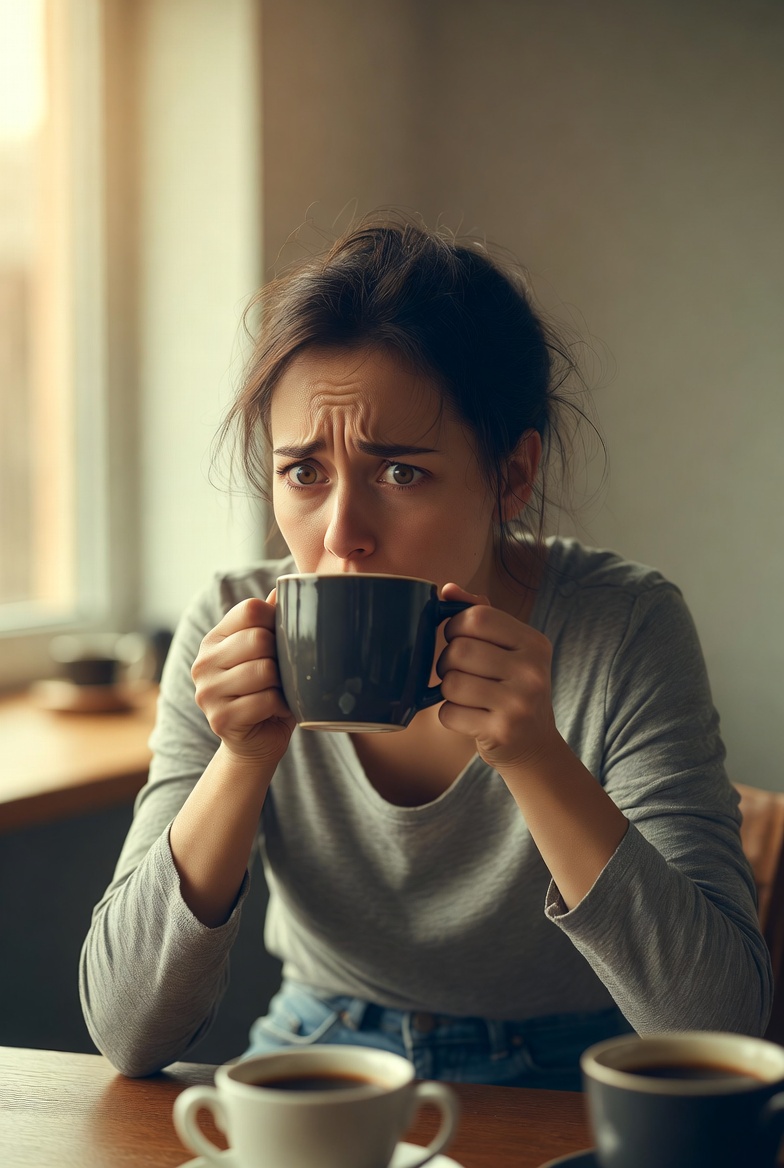
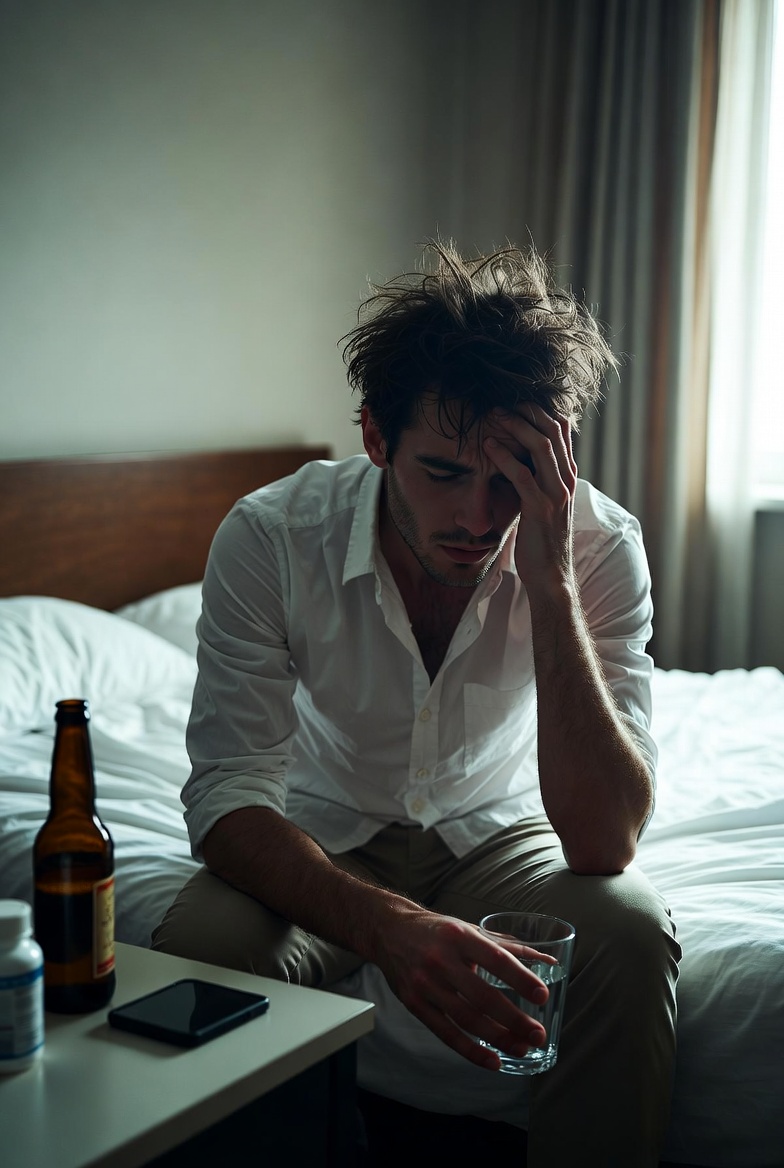
There is a particular 7am in the life of anyone who has ever drunk too much. You wake up before the alarm. Your heart is already running. Before your eyes are fully open, the memories start arriving in flashes — and each one is worse than the last. What did you say to her? Did you hug the Uber driver? Was that a joke you told or a confession you made? The dread moves in like weather and takes up the whole morning.
This experience has a name now. It was not really acknowledged in medical literature until the last decade, but "hangxiety" is now a well-studied clinical phenomenon with a precise neurochemical explanation and a predictable timeline. It is not a character flaw, a moral reckoning, or a sign that the real you is leaking out. It is a chemical rebound state, and understanding the shape of it changes almost everything about how you handle it.
Sources: McKinney & Coyle (hangover symptomatology); Marsh et al. (2019) shyness & hangxiety; UK Drinkaware survey data.
What hangxiety actually is
Alcohol does two things to your brain chemistry while it is in your system. It enhances GABA, your brain's main calming, inhibitory neurotransmitter. And it suppresses glutamate, the main excitatory neurotransmitter. The net effect, while you are drinking, is that the calming signal is dialled up and the alarm signal is dialled down. This is why a couple of drinks loosens your tongue at a work event, makes small talk bearable, and turns the dance floor into a plausible option.
The brain, however, is not passive. It registers this imbalance and adapts. It reduces its own GABA production and increases glutamate sensitivity to compensate. While the alcohol is in you, you feel fine. The moment the alcohol starts clearing, the adaptations are still in place — and suddenly you have less calming signal than normal and more alarm signal than normal. Your nervous system is now running hot.
This rebound is not metaphorical. It is measurable on EEG, in cortisol levels, in heart rate variability, and in the activity of the same brain regions that light up during panic attacks. Hangxiety is, neurochemically, a temporary chemical anxiety state. It is also usually bundled with a cortisol spike, fragmented sleep (alcohol destroys REM), dehydration, and low blood sugar — all of which independently worsen anxiety.
The hangxiety rebound, step by step
Why the drinks that felt calming last night are producing panic this morning
The symptoms, and why they feel so loud
Hangxiety is not just "feeling a bit anxious". It has a specific symptom cluster that people consistently report, and many of them map directly onto the known effects of GABA rebound. Here is how often each shows up in the morning-after experience of drinkers who report significant hangxiety.
The top three — racing thoughts, shame, and social paranoia — are the signature. You can have a purely physical hangover without any of them. When the physical symptoms are mild but the mental ones are loud, that is hangxiety showing up disproportionately, and it is more common in people who already live with an anxious baseline.
Why it is worse for anxious people
If you already have generalised anxiety, social anxiety, or panic disorder, alcohol is likely paying you back with interest. Two things are happening. Physiologically, an already-reactive glutamate system produces a sharper rebound when the alcohol clears — your chemistry is a louder spring. Psychologically, an anxious mind has more material to ruminate on, more social interactions to second-guess, and a stronger tendency to catastrophise ambiguous memories into certainty of disaster.
The ugly corollary is that alcohol often becomes a tool for managing anxiety in the first place — the pre-dinner wine, the glass to take the edge off, the second round that turns a good night into a messy one. It works, acutely. It also, over time, drives your baseline anxiety up by repeatedly yanking your GABA/glutamate balance around. Many people with chronic anxiety discover, after cutting alcohol for 2 to 4 weeks, that the baseline anxiety they thought was "just them" was partly alcohol the whole time.
The shame spiral, and why the memory plays tricks
A specific and particularly vicious feature of hangxiety is what the research literature politely calls "interpersonal shame" and what you might call the 7am replay. You lie there, eyes closed, and your brain generates a highlight reel of the night before — specifically the bits you are least sure about — and presents each one with the emotional weight of certainty that you humiliated yourself.
This happens because your brain, running on rebound anxiety, is scanning aggressively for threats. Any ambiguous social memory ("did that joke land?" "why did she go quiet after?") gets flagged as threatening until confirmed otherwise. The result is that hangxiety generates social paranoia about interactions that were, almost always, entirely fine. The people you are convinced are furious with you are almost certainly also lying in their own beds wondering the same thing about you.
A useful reframe for the 7am replay: your brain is not reporting what actually happened. It is reporting what a hyper-aroused nervous system thinks might have happened. You can read its reports with curiosity rather than treating them as verdicts. Most of the time, the thing you are sure happened either did not happen or did not land the way you remember it.
What helps, and what makes it worse
The things that help a hangxiety are mostly the things that help a hangover, plus a few specific interventions for the psychological layer. The things that make it worse are, almost universally, the things that feel most tempting at 8am.
The stuff your 7am brain will suggest.
Hair of the dog (works for an hour; extends total misery by a day). Heavy caffeine (amplifies the glutamate rebound). Doom-scrolling and message-checking (feeds the shame loop). Lying in a dark room ruminating (extends the psychological phase). Crash-dieting or skipping meals (low blood sugar is a direct anxiety driver). Staying in bed past midday (wrecks your circadian reset).
Boring, unglamorous, evidence-backed.
Water with a pinch of salt or an electrolyte sachet. A proper meal with protein and complex carbs. Daylight exposure — ideally a short walk outside, not a workout. Paracetamol if needed, within safe limits (avoid ibuprofen on an irritated stomach). A cool shower. Time away from your phone. And acceptance that you will feel better by the evening whether you do anything clever or not.
The 24-hour recovery timeline
If you want a map to follow when you are in it, here is the rough shape of a hangxiety day — what is happening in your body at each phase, what actually helps, and what to avoid. Roughly calibrated to waking at 7am after a heavy night.
A hangxiety day, hour by hour
Where you are in the rebound — and what to do at each stage
Rough guide only — actual timings vary with body weight, sex, amount drunk, and sleep quality. The shape holds either way.
When hangxiety is a bigger signal
Occasional hangxiety after a heavy night is normal. There are, however, specific patterns that are worth paying attention to rather than dismissing as "just hangover brain". If the dread about drinking begins before you have drunk anything. If hangxiety regularly lasts beyond 48 hours. If drinking is what you use to settle your anxiety in the first place. If you find yourself planning the week around drinking or recovering. If you have started drinking earlier or alone to manage symptoms.
None of these are moral failures, and none of them require hitting a crisis point before taking them seriously. They are signals that alcohol has become part of an anxiety loop — using alcohol to calm the anxiety that alcohol is partly causing — and the treatment for this is well-established. In the UK, Drinkaware, your GP, and NHS alcohol services are all good starting points. NHS Talking Therapies specifically treats the anxiety side, and most services are alcohol-aware and non-judgmental.
A last word
You are not a bad person. You did not ruin everything. The people you are convinced hate you are almost certainly not thinking about last night at all — and if they are, they are thinking about their own version of it, with their own 7am dread. Your brain is telling you a story about yourself that is a chemical artefact, not a verdict. By this evening the story will sound different. By tomorrow it will sound ridiculous. Hold on that long and let the chemistry do its work.
Drink water. Eat something. Put down the phone. Go outside for ten minutes. You will be okay. You have been here before, and you were okay then too.