Meditation has an image problem — or rather, it has an honesty problem. The popular narrative positions it as a universally beneficial, risk-free practice that anyone can do to reduce stress and anxiety. The clinical evidence is more nuanced: meditation is genuinely helpful for many people in many contexts, and it produces increased anxiety, distress, or other adverse effects in a meaningful minority of people, particularly those with anxiety disorders, trauma histories, or certain rumination patterns. The wellness industry largely ignores this. The research does not.
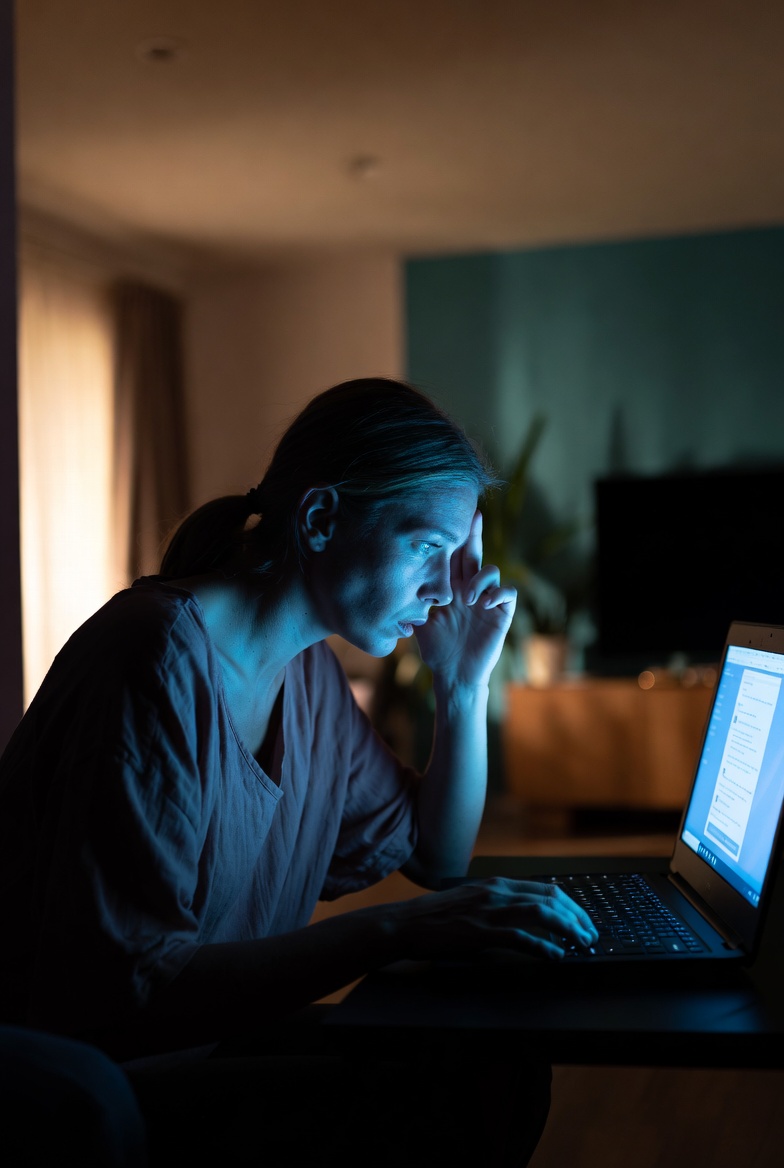
It is a Tuesday evening. You are sitting cross-legged on the rug in the spare room, the Calm app open on your phone, headphones in. A soft voice is telling you to notice your breath. Just notice the sensation of the breath entering your nose. Don't try to change it. Just observe.
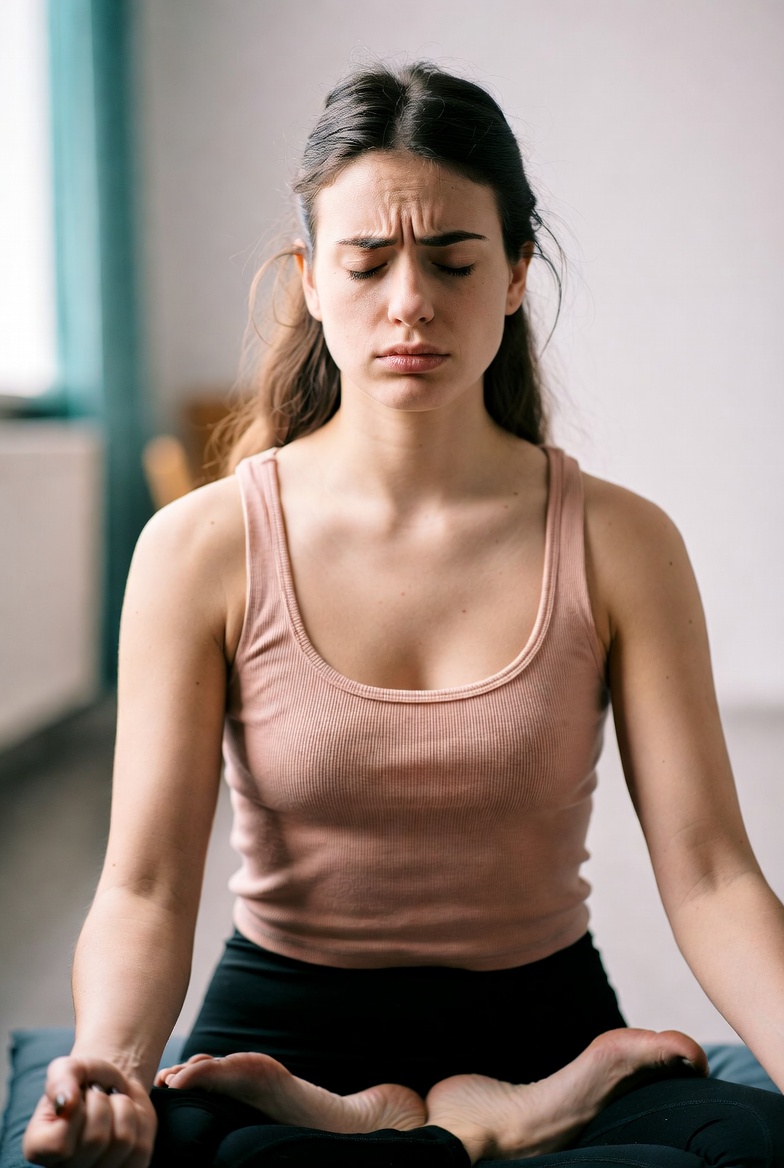
For the first thirty seconds it works. Then you notice you are listening to your breath too hard, and you wonder if you are doing it right, and the wondering is a thought, so you remember you are supposed to observe the thought, and then you are observing the thought about the thought, and somewhere in there the knot in your chest that you sat down to calm has doubled in size. The voice says: just sit with whatever arises. What is arising is the worst version of every worry you have had this week, louder than it has been all day, with nothing to compete against them.
You finish the ten-minute session with your jaw clenched and the beginning of a panic attack behind your eyes. You feel worse than when you started. And because everyone has told you meditation is the answer, you feel one more thing on top of the anxiety: shame that you cannot do the thing that is supposedly simple. You are not broken. What just happened to you has a name, a mechanism, and a research literature. Your nervous system was responding correctly to the task you gave it. The task was the wrong task for your brain.
The meditation paradox for anxious minds
Meditation instructions sound simple: sit still, focus on your breath, observe your thoughts without judgment. For people without clinical anxiety, this can be profoundly calming. For people caught in anxiety spirals, the instruction to "sit with your thoughts" is like telling someone drowning to "sit with the water."
The mechanism is attentional competition — or rather, the absence of it. During ordinary activity, attentional bandwidth is partly occupied by external tasks and stimuli, which compete with anxious thought content for cognitive resources. When you remove all competing stimuli and sit in silence — as meditation instructions typically require — the anxious brain fills the freed attentional space with the material it has been generating all along. Without the distraction of external demands, catastrophic thoughts become louder, more vivid, more convincing, and more elaborated.
This is not a failure of meditation practice. It is a predictable consequence of removing competing stimuli from a brain that is actively generating threatening content at high intensity. The silence that creates calm for a non-anxious brain creates an echo chamber for an anxious one.
Meditation-induced anxiety — the clinical evidence
This is not anecdotal. Research published in Clinical Psychology Review and several other peer-reviewed journals has documented adverse effects of meditation practice in significant minorities of practitioners. A 2022 study found that roughly 25% of regular meditators had experienced at least one adverse effect they attributed to meditation — including increased anxiety, panic, depersonalization, and hypersensitivity.
Willoughby Britton at Brown University has conducted some of the most thorough research on meditation-related difficulties. Her work documents what she calls "meditation-induced alterations in consciousness" — altered perceptual experiences, anxiety amplification, and distress — that occur in a meaningful proportion of people who meditate, particularly those with mental health histories.
The research is careful to note that meditation is overall beneficial for the majority and remains one of the better-studied mind-body interventions. The point is not that meditation is harmful — it is that it is not universally appropriate, and the belief that it should work for everyone causes people to feel defective when it backfires for them.
Two Brains, Same Session
The same 20-minute session, the same guided audio, the same posture and breathing instructions — applied to two brains with different baseline rumination tendencies. The teal curve shows what the wellness industry promises: a gradual reduction in anxiety as external stimuli are removed and the nervous system settles. The red curve shows what actually happens when the brain has an active internal content stream — catastrophic thoughts, interoceptive hypervigilance, trauma material, intrusive imagery — and suddenly has no competing external demand for attention. The same silence that calms one brain creates an echo chamber in the other. By minute 20 the two people have had opposite experiences. Neither is doing anything wrong. They simply have different brains needing different interventions. The article you are reading is the explanation the wellness industry owes the second person and almost never gives.
If meditation makes your anxiety worse, you are not failing at meditation. You are experiencing a documented, underacknowledged response that is particularly common in people with anxiety disorders. The appropriate response is to find approaches that work for your specific brain — not to try harder at something that is generating the opposite of its intended effect.
When meditation specifically backfires
During acute anxiety or a spiral. The instruction to sit with your thoughts mid-spiral removes the attentional and physical activity that would otherwise compete with the anxious content. Movement, grounding, and physiological intervention are what the nervous system needs at peak anxiety — not stillness.
For health anxiety. Body scan meditations — a common mindfulness format — ask you to systematically focus attention on each area of your body in sequence. For someone with health anxiety, this is body-checking by another name. The sustained, deliberate attention directed at the body is precisely the behaviour that maintains health anxiety by finding sensations to catastrophise about.
For rumination patterns. If your primary anxiety pattern is overthinking and rumination, "observing your thoughts" can become "engaging more deeply with your thoughts." Without therapeutic guidance, the boundary between non-judgmental observation and elaborative rumination is extremely easy to cross. Many people who ruminate find that unstructured meditation significantly deepens the rumination rather than creating distance from it.
For trauma. Meditation instructions to "sit with what arises" can bring up traumatic material in an uncontrolled, unsupported context. Trauma-sensitive modifications to meditation practice exist, but mainstream meditation apps and classes rarely implement them. People with trauma histories report some of the highest rates of adverse meditation experiences in the research literature.
For social anxiety and self-focused attention. Some forms of meditation increase self-focused attention — directing awareness inward. For social anxiety, which is often maintained by elevated self-focused attention during social situations, practices that further increase this focus can worsen the presentation rather than improving it.
What meditation IS good for — being fair
Before outlining the alternatives, it is worth being fair about where meditation does have a strong evidence base, so this is read as calibration rather than dismissal.
Where meditation helps
- Mild to moderate stress reduction in non-clinical populations
- Reducing physiological stress markers (cortisol, heart rate variability)
- Building metacognitive awareness over months of practice
- Improving attention and concentration
- Supporting recovery after anxiety has reduced through other means
- Body-focused practices in those without health anxiety
Where meditation backfires
- Acute anxiety or panic — stillness amplifies the spiral
- Health anxiety — body scans become body-checking
- Chronic rumination — observation becomes engagement
- Trauma — unstructured contact with difficult material
- OCD — sitting with intrusive thoughts without ERP framework
- Social anxiety — increased self-focused attention
See meditation-induced anxiety patterns in specific cases
- Sarah's health anxiety case study — what happened when her GP suggested body scan meditations and each 15-minute session became 15 minutes of catastrophising about bodily sensations
- Michael's OCD case study — the specific danger of unstructured meditation in OCD where “just observing” intrusive thoughts without an ERP framework deepens the disorder
- Ahmed's driving anxiety case study — why mindfulness was the wrong intervention for trauma-driven anxiety and what replaced it (trauma-focused CBT and EMDR)
- The 90-second rule — the physiological sigh and active alternatives for the moments when stillness is not the intervention you need
Common mistakes when meditation is backfiring
If meditation is making your anxiety worse and you are not sure whether to continue, these are the six most frequent mistakes people make — usually because the wellness framing trains them to blame themselves rather than the mismatch.
Trying harder when it's clearly backfiring
“I just need to sit with it longer.” “I'm not doing it right yet.” “Maybe a different app.” “Everyone says it works, so I must be broken.” If meditation has been worsening your anxiety for more than 2\u20134 weeks of consistent practice, the answer is not to try harder. The answer is to try something else. Your nervous system is giving you information. Listen to it.
Using body scans during a health anxiety flare
Body scan meditations ask for sustained attention on bodily sensations. For someone in a health anxiety flare, this is body-checking. It finds sensations that would have gone unnoticed, amplifies them through sustained focus, and gives the catastrophising system new material. Body scans can work for some people, at some times. A health anxiety flare is not that time.
Treating rumination as “observation”
“Observe your thoughts without judgment” sounds like a neutral instruction. For people with a strong rumination pattern, it almost always becomes engagement in disguise. You don't just observe the thought — you follow it, elaborate it, argue with it, dwell in it. The boundary between observation and elaboration is extremely thin for ruminators. Without structured therapeutic framing, meditation tends to deepen rumination rather than free you from it.
Meditating during an acute spiral
Sitting down to meditate during a panic spike or acute anxiety wave is almost always counterproductive. What the nervous system needs during peak activation is physiological intervention (sighing, cold water, movement), attentional competition (grounding, external focus), and sometimes benign distraction \u2014 not enforced stillness alone with the anxious content. Save meditation (if it works for you at all) for calm states, not crisis states.
Using meditation to avoid feelings (“spiritual bypass”)
Meditation as a way to detach from difficult emotions rather than work through them is a documented maladaptive pattern with its own clinical name: spiritual bypass. It can look productive (“I'm being mindful”) while functioning as sophisticated avoidance. If you find yourself meditating instead of feeling something difficult, rather than alongside feeling it, you may be using the practice to maintain the thing you think you're resolving.
Doubling the dose to “break through”
Going from 10 minutes to 30 minutes, or from one session a day to three, when short sessions are already making you more anxious. This is like doubling the dose of a medication that is producing adverse effects. Adverse effects do not resolve with higher doses; they typically worsen. The right response to meditation-induced anxiety is less meditation, not more, and ideally a different intervention entirely.
Why the wellness industry oversells it
Meditation has become a billion-pound industry. Apps, courses, retreats, corporate wellness programmes — all built on the premise that meditation is universally beneficial and that difficulties with it reflect inadequate practice rather than genuine unsuitability. This framing is commercially convenient and clinically irresponsible.
The evidence base for meditation is real but conditional. It works well for specific populations, in specific conditions, for specific outcomes. The population with clinical anxiety disorders is not the primary population in which it has been most robustly validated. The conditions of acute anxiety are not the conditions in which it produces the best outcomes. And the outcome of reducing clinical anxiety is not the primary outcome it has been tested for.
When someone with health anxiety tries body scan meditation and ends up spending 20 minutes catastrophising about each physical sensation they encounter, that is not a meditation failure. That is a mismatch between the practice and the presentation — a mismatch the wellness industry is not incentivised to acknowledge.
What works instead — 5 evidence-based alternatives
1 Active CBT techniques
Cognitive behavioural therapy techniques work differently from meditation in a crucial respect: they give the anxious brain something structured to do. Thought records, evidence challenges, probability checks, and behavioural experiments actively engage cognitive resources in directed tasks. This occupies the attentional bandwidth that would otherwise fill with unstructured anxious content.
Where meditation asks you to observe thoughts without engaging, CBT asks you to engage deliberately and systematically, with a structured framework that prevents the engagement from becoming rumination. For anxious brains that generate problems, CBT provides a structured method for working through them. The activity is the intervention.
2 ACT cognitive defusion
ACT defusion achieves something similar to the observer distance that meditation aims for, but through a more active mechanism. "I notice I'm having the thought that something bad will happen" creates distance from the thought without requiring passive, sustained observation of it. The defusion is accomplished through language — through the active act of labelling — rather than through extended, silent attention.
This is particularly effective for people who find that unstructured meditation collapses the boundary between observing and being absorbed by thoughts. The brief, active labelling of defusion interrupts the automaticity of the thought without prolonged exposure to its content.
3 Physical grounding and movement
For acute anxiety, the nervous system needs something fundamentally different from stillness. Grounding techniques — actively engaging sensory awareness through physical contact, movement, or environmental attention — create attentional competition with anxious thought content rather than removing all competition and leaving the field to the anxiety.
Physical movement does something stillness cannot: it metabolises the cortisol and adrenaline that anxiety has produced. Walking, exercise, cold water, active breathing — these are physiologically appropriate responses to an activated stress state in a way that enforced stillness is not. The body has been prepared for action. Giving it some resolves the activation rather than containing it.
4 Structured breathing techniques
The physiological sigh, box breathing, and 4-7-8 breathing all produce the parasympathetic activation that meditation aims for, but through direct physiological mechanisms rather than through sustained attentional focus. They are faster, less demanding of sustained attention, and can be applied in any context — including mid-anxiety, where meditation's demands are hardest to meet.
Structured breathing also provides the attentional occupation that many anxious brains need: the counting, the sequence, the breath mechanics require just enough attention to interrupt the free-running of catastrophic thought without the open-ended, unstructured quality of meditation that allows anxious content to dominate.
5 Guided dynamic sessions — not passive tracks
A recorded meditation track is passive, static, and unable to respond to what you are actually experiencing. This is a significant limitation for anxious people, who may be experiencing very different things from the calm, stable state the track was designed for. A guided session that asks what is happening right now and responds to the answer is a fundamentally different intervention.
The responsiveness matters. Anxiety is variable and specific. A panic-adjacent spiral requires different intervention from chronic low-level worry. A health anxiety trigger requires different techniques from relationship anxiety. The static track cannot make these distinctions. A live, adaptive session can.
This is what Stop The Loop is. Not a meditation app. Not a breathing track. A live, adaptive CBT and ACT session that responds to what you are experiencing right now — not a passive track you hope will work, but an active interaction that adjusts to your specific pattern. Not meditation. Loop breaking. Try it free.
How to tell if meditation is helping or hurting you
If you have been meditating for anxiety and are unsure whether it is helping, ask these questions: After a meditation session, is your anxiety higher or lower than before? Over weeks of practice, are you experiencing fewer anxiety spirals or more? When you sit to meditate, does your anxiety content get louder or quieter? If the honest answers are "higher," "more," and "louder," meditation is not the right primary intervention for your anxiety presentation.
That does not mean you must abandon it permanently. Meditation practised after anxiety has been significantly reduced through CBT or ACT is much less likely to produce adverse effects — the content that would otherwise dominate the silence has already been substantially addressed. Many people find that meditation becomes genuinely useful once the acute anxiety is managed, where it was counterproductive before.