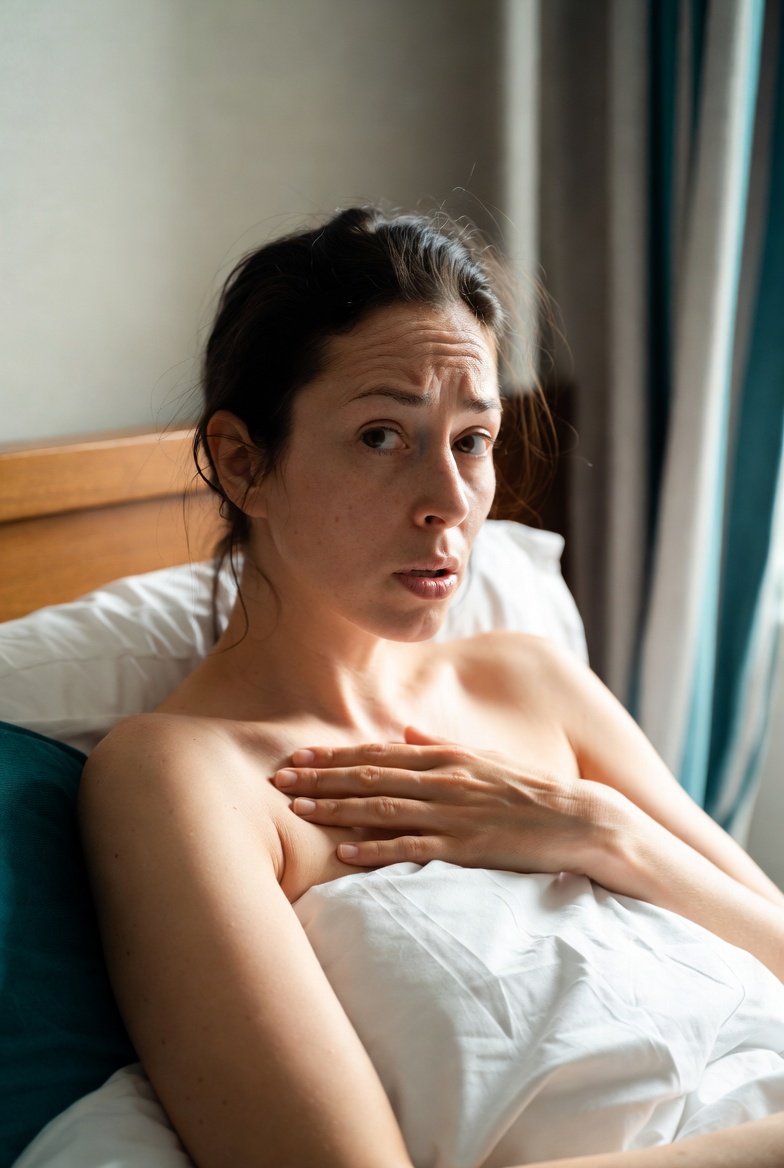
The words "worry," "anxiety," and "panic" are often used as synonyms in everyday conversation. Someone says "I'm anxious about the presentation" when they mean they are worried about it. Someone says they "panicked" when they mean they felt a surge of anxiety. This imprecision is understandable but clinically costly. Each experience has distinct mechanisms and responds to distinct interventions. Applying the wrong intervention — trying to challenge thoughts during a panic attack, for instance, or using breathing exercises for chronic rumination — produces poor outcomes not because the techniques are wrong but because they are being matched to the wrong target.
Three people are sitting at three desks at three minutes past four on a Wednesday afternoon. From the outside, they look the same: still, slightly distracted, slightly tense. From the inside, they are having three completely different experiences.
The first person is worrying. A specific thought arrived twenty minutes ago about something her teenage son said yesterday, and she has been turning it over in different angles ever since. The thought has weight but not heat. Her heart rate is normal. If she stood up and walked to the kettle, the thought would still be there, but she would notice the kettle. The second person is anxious. He has been quietly elevated all day, since waking. There is no specific thought he is having — just a tight chest, a slight nausea, a sense that something is wrong somewhere, a vigilance he cannot put down. He has been refreshing his email every six minutes. He could not tell you what he is afraid of, only that he is. The third person was fine until ten seconds ago. Then her heart rate jumped, her hands went cold, the lighting in the room shifted, and a wave of certainty arrived that something terrible is happening. She is gripping the edge of the desk.
Three completely different events. Three different mechanisms. Three different shapes. The first will last hours. The second has been going on for weeks and will continue. The third will peak within ten minutes and resolve within thirty. Treating any of them with the techniques designed for another is one of the most common reasons people feel that “nothing works” for their anxiety. The first step is naming what is actually happening.
A quick-reference snapshot
Worry
- Primarily cognitive — thoughts
- Future-oriented
- Verbal, language-based
- Mild to moderate physical component
- Productive or unproductive
- Responds to cognitive techniques
Anxiety
- Cognitive and physiological
- Diffuse or object-specific
- Sustained state, not acute spike
- Maintaining behaviours present
- Affects daily functioning
- Responds to CBT + physiology
Panic
- Acute physiological emergency
- Sudden onset, rapid peak
- Intense physical symptoms
- 10-min peak, 30-min subside
- Catastrophic misinterpretation
- Physiology first, then cognitive
Three Shapes
The three shapes are different by category, not by intensity. Worry is the slow gentle waves — cognitive activity that runs through the day at moderate amplitude, sometimes mistaken for anxiety because it persists, but distinguishable by its lower physical signature and its location in thought rather than body. Anxiety is the sustained plateau \u2014 a whole-body state that does not fully release, with morning rises tied to the cortisol awakening response and evening rises tied to fatigue and rumination. Panic is the dramatic single peak \u2014 quiet baseline most of the day, then a sharp acute spike that peaks within 10 minutes and resolves within 30, often appearing “from nowhere” because the trigger is a small interoceptive sensation rather than a visible event. Notice what the chart makes obvious: panic is shorter than anxiety, anxiety is more activated than worry, and the techniques that work for one do not necessarily work for another. Matching intervention to shape is the entire game.
Worry — the cognitive channel
Worry is a thought process. It is your brain's attempt to problem-solve by thinking ahead: "What if I don't finish the project in time?" "What should I say in that conversation?" "What if the test result comes back abnormal?" Worry is primarily verbal and language-based — it lives in the cortex, not the amygdala. It is future-oriented by default, engaged with possible threats rather than present ones.
Healthy worry is functional and time-limited. It motivates preparation, prompts action, and resolves once the concern is addressed or the deadline passes. This is adaptive worry — the cognitive process that makes you prepare for an important meeting rather than winging it.
Unhealthy worry — what clinicians call pathological worry or rumination — is circular, open-ended, and produces no solutions. It has several distinguishing features: it returns to the same concerns repeatedly without resolution; it generates new "what if" branches when one concern is addressed; it produces no actionable output; and it maintains itself through the illusion that worrying is somehow useful or protective — "if I think about this enough, I'll either solve it or be prepared for the worst."
This illusion of utility is one of the primary maintaining factors for pathological worry. The person who worries chronically is rarely aware of worrying as a choice or behaviour — it feels like a necessary response to real concerns. Identifying worry as a behaviour, with its own maintaining logic and its own exit strategies, is the first step to addressing it.
Physiologically, worry has a relatively modest physical component compared to anxiety and panic. The autonomic arousal associated with worry is lower — some muscle tension, mild cardiovascular changes — and the body is not in full sympathetic activation. This is partly why worry is so cognitively sustained: unlike anxiety and panic, it does not produce the physical discomfort that signals "something needs to change right now."
Anxiety — the full-body state
Anxiety is worry plus physiology — but that undersells the difference. Anxiety is not just worry with physical symptoms added. It is a qualitatively different state in which the whole nervous system is involved: elevated heart rate, muscle tension, shallow breathing, digestive changes, sleep disruption, heightened threat-monitoring, and the cognitive distortions that accompany amygdala activation.
Where worry is a thought process that can be paused and resumed, anxiety is a state that persists independently of the thoughts that generated it. You can stop thinking about the concerning topic and still feel anxious. The physical state sustains itself beyond the cognitive content. This is why "just stop thinking about it" fails as advice for anxiety — the state has a physiological momentum that the thought process alone cannot resolve.
Anxiety also differs from worry in its relationship to specific objects. Worry is almost always about something specific and identifiable. Anxiety can be object-specific (social anxiety, health anxiety, specific phobias) but can also be free-floating — a persistent sense of unease, threat, or dread without a specific identifiable concern. This free-floating anxiety is one of the hallmarks of Generalised Anxiety Disorder: a pervasive background state rather than a specific response to specific concerns.
The maintaining behaviours of anxiety are a critical distinction from worry. Anxiety disorders are maintained by avoidance, safety behaviours, and reassurance-seeking — behaviours that provide short-term relief at the cost of long-term escalation. Worry can occur without these maintaining behaviours; clinical anxiety almost always involves them. The maintaining behaviours are what transform an elevated mood state into a disorder that persists and often worsens without intervention.
| Feature | Worry | Anxiety | Panic |
|---|---|---|---|
| Primary system | Cortex (cognitive) | Cortex + amygdala | Amygdala (physiological) |
| Onset | Gradual, triggered by thought | Gradual or context-triggered | Sudden spike, seconds |
| Duration | Minutes to hours | Hours to days (sustained state) | Peaks at 10 min, resolves 30 min |
| Physical component | Mild | Moderate to significant | Severe — full fight-or-flight |
| Specific trigger | Usually identifiable | Specific or free-floating | Sometimes none apparent |
| Maintaining behaviour | Rumination loop | Avoidance + safety behaviours | Avoidance of triggering contexts |
| Primary treatment target | Thought process | Thought + physiology + behaviour | Physiology first, then cognition |
Panic — the acute emergency response
Panic is anxiety at maximum physiological intensity, compressed into minutes. It is the sympathetic nervous system's emergency response firing at full power: adrenaline flooding the bloodstream, heart racing by 20–40 beats per minute above resting, breathing rapid and shallow, chest tight, muscles primed for action, and a sense — often of certainty — of impending doom, dying, losing control, or going mad.
Panic attacks peak in intensity within approximately 10 minutes and typically subside within 30. This is not a description of mild discomfort — at peak intensity, a panic attack produces the most frightening experience many people have ever had. The combination of severe physical symptoms and the cognitive conviction that something is catastrophically wrong creates a uniquely distressing experience that bears little resemblance to ordinary worry.
The key mechanism sustaining panic attacks is the catastrophic misinterpretation of physical symptoms — a process described in David Clark's cognitive model of panic disorder. The physical symptoms of the stress response (palpitations, chest tightness, dizziness) are interpreted as evidence of medical emergency (heart attack, stroke, imminent death), which triggers more adrenaline, which produces more severe symptoms, which produce more catastrophic interpretation. The attack is self-sustaining through this thought-symptom loop for as long as the loop continues.
Panic disorder — the clinical condition — is not primarily about the attacks themselves but about what develops around them: anticipatory anxiety about having another attack, avoidance of situations associated with previous attacks, and the significant life restriction that can develop as a result. Many people with panic disorder organise their lives around preventing attacks, which progressively narrows the range of situations they engage with and deepens the disorder's impact.
A critical distinction: panic is not "really bad anxiety." It is a specific physiological event with its own onset pattern, duration, peak intensity, and mechanism. Treating it with cognitive techniques before the physiological response has been addressed is like arguing with someone while a fire alarm is going off. Address the alarm first.
When they overlap — and how to tell which is driving
In practice, worry, anxiety, and panic rarely occur in clean isolation. Chronic worry raises baseline anxiety. Sustained anxiety lowers the threshold for panic attacks. Panic attacks generate anticipatory anxiety that is maintained by worry about when the next one will occur. The three experiences interact and amplify each other in real presentations.
Despite this overlap, identifying which is primary at a given moment matters for choosing the right response. A useful triage question is: Where is this primarily located?
If the experience is primarily in your head — circling thoughts, "what if" chains, verbal rehearsal of scenarios — the primary experience is worry, and the intervention should be cognitive: thought-stopping, worry postponement, problem-solving the solvable, accepting the unsolvable.
If the experience involves both persistent thought and sustained physical arousal — tension, elevated heart rate, digestive discomfort, sleep disruption, hypervigilance — the primary experience is anxiety, and the intervention needs to address both: physiological calming and cognitive restructuring.
If the experience is a sudden acute spike with severe physical symptoms and a sense of catastrophic urgency — the primary experience is panic, and the intervention must start with physiology. Breathing, grounding, naming. Cognitive techniques come later, once the acute cascade has begun to subside.
Treatment approaches matched to each experience
1 For worry — cognitive interruption and postponement
Worry postponement is one of the most evidence-based techniques specifically for pathological worry: when the worry arises, explicitly acknowledge it and defer it to a designated "worry time" — a 20-minute window later in the day. Write it down. At the designated time, engage with the worry deliberately. Outside that window, redirect. This separates the thought from the automatic response, creates structured rather than intrusive engagement with the concern, and often reveals that many worries have reduced urgency by their scheduled time.
CBT techniques for worry also include productive versus unproductive worry classification (is this something I can act on, or is it hypothetical?), problem-solving for actionable worries, and acceptance practice for unresolvable concerns. The goal is not to eliminate worry but to change its relationship to action: worry that prompts useful action is functional; worry that loops without producing action needs interruption.
2 For anxiety — CBT plus physiological calming
Anxiety requires a dual approach because it involves both cognitive distortions and physiological activation. The physiological component — elevated arousal, muscle tension, sleep disruption — cannot be resolved by cognitive techniques alone; it needs direct physiological intervention (breathing, grounding, movement, sleep hygiene). The cognitive component — catastrophising, emotional reasoning, other distortions — needs structured CBT work.
The maintaining behaviours are typically the most important treatment target: graduated exposure to avoided situations removes the avoidance that confirms the threat's validity; response prevention for reassurance-seeking builds genuine uncertainty tolerance; safety behaviour removal allows the disconfirming evidence to accumulate. Addressing the maintaining behaviours is what produces durable improvement, where symptom management alone provides only temporary relief.
3 For panic — physiology first, always
During a panic attack, the prefrontal cortex is suppressed by amygdala activation. Cognitive techniques — thought challenging, evidence review, probability assessment — require prefrontal cortex function to execute. Attempting to apply them during peak panic is neurologically premature. The physiological response must be addressed first: the physiological sigh (double inhale, long exhale) begins parasympathetic activation immediately. Sensory grounding occupies attentional bandwidth with non-threatening data. Naming the experience ("this is a panic attack, not a medical emergency") provides accurate reframing once breathing has begun to slow.
Long-term management of panic disorder involves interoceptive exposure — deliberately inducing mild versions of panic sensations in a safe context — to retrain the catastrophic misinterpretation of physical symptoms. When you know through repeated experience that a racing heart does not mean cardiac danger, the interpretation changes. The sensation may still arrive; it no longer automatically generates catastrophe.
Stop The Loop adapts to where you are on the spectrum. It assesses whether you are worrying, anxious, or panicking and delivers the appropriate technique for that level — not one-size-fits-all, but matched to what you are actually experiencing right now. Try it free.
See each experience in specific cases
- Kate's imposter syndrome case study — chronic worry running for fifteen years before being identified as a behaviour rather than a personality trait, and how scheduled worry time changed it
- Lisa's morning anxiety case study — sustained anxiety tied to the cortisol awakening response, the full-body version of the experience
- Ahmed's driving anxiety case study — the panic attack at the wheel of a motorway delivery van and how 18 months of avoidance was reversed through interoceptive exposure
- What happens during a panic attack — the second-by-second neuroscience of the panic spike, with the curve showing why it cannot last more than 30 minutes
Common mistakes when matching the technique to the experience
The single most common reason people feel that "anxiety techniques don't work" is that they are using the right technique on the wrong experience. These are the six most frequent mismatches.
Trying to challenge thoughts mid-panic
"Is this realistic? What's the evidence?" These are excellent CBT questions for chronic worry and elevated baseline anxiety. They are useless during a panic attack because the prefrontal cortex \u2014 the system that would evaluate them \u2014 is suppressed by amygdala activation. Physiology first (sigh, ground), then cognitive once breathing has begun to slow. Wrong tool, wrong window.
Using breathing exercises for chronic worry
Box breathing, physiological sighs, and diaphragmatic work are excellent for acute physiological activation. They do almost nothing for unproductive rumination because rumination is not driven by physiological arousal. The intervention for worry is cognitive (scheduled worry time, productive vs unproductive distinction, problem-solving). Trying to breathe your way out of rumination usually produces frustration on top of the worry.
Treating panic as “really bad anxiety”
Assuming that the techniques that work for anxiety, applied harder, will work for panic. They will not. Panic has its own specific neurological event with its own treatment protocol. Generalised anxiety techniques applied during a panic attack often make things worse \u2014 increased self-monitoring during peak activation tends to amplify the cycle. Panic-specific techniques are categorically different.
Treating worry like a problem requiring more analysis
Pathological worry maintains itself through the illusion that thinking about it more will somehow resolve it. The intervention is structural \u2014 contained, scheduled engagement followed by deliberate disengagement \u2014 not deeper engagement with the content. The harder you think about most worries, the longer they last. Understanding worry as a behaviour rather than a problem is the unlock.
Not noticing which experience you're actually having
Many people apply the same self-management strategy to every form of distress regardless of category. The first step in good self-management is asking: is this thinking, sustained physical activation, or acute spike? The answer determines the technique. The diagnostic question is more useful than any single intervention.
Assuming all three need the same professional treatment
NHS Talking Therapies will offer different protocols for GAD (generalised anxiety with chronic worry as a primary feature), generalised anxiety, and panic disorder. CBT is the umbrella term, but the specific techniques inside differ substantially. If a previous course of CBT “didn't work”, it is worth asking which presentation was being targeted \u2014 misidentified panic disorder is sometimes treated as generalised anxiety, with predictable poor outcomes.
When normal becomes clinical
All three experiences — worry, anxiety, and panic — exist on a spectrum from normal and adaptive to disordered and impairing. Everyone worries. Everyone experiences anxiety. Many people have experienced something approximating a panic response. These are not inherently pathological.
The clinical threshold is not intensity alone but impact on functioning. The DSM and ICD criteria for anxiety disorders require that the symptoms cause significant distress or significant impairment in social, occupational, or other important areas of functioning. Worry that motivates preparation and then resolves is adaptive. Worry that consumes hours daily, produces no actionable output, and significantly disrupts sleep, work, or relationships warrants clinical attention.
Similarly, anxiety that is uncomfortable but does not prevent engagement with life differs meaningfully from anxiety that drives progressive avoidance of situations, requires significant safety behaviours to manage, and is narrowing the person's world. And a single panic attack experienced during an extreme stressor differs from panic disorder, in which attacks recur, their anticipation becomes itself a source of significant anxiety, and life organisation begins to revolve around preventing them.
Understanding where you are on this spectrum — and which of the three experiences is primary — is the foundation for choosing the right response. Not all anxiety tools are equal. Not all anxiety tools work for all anxiety experiences. The matching matters.