A head teacher running on empty
Lisa had been a head teacher at a primary school in Surrey for three years when she started waking at 5am every morning with her heart already racing and a sense of absolute dread about the day ahead. She had been a teacher for twenty-two years. She had wanted to be a head teacher since her first year of training. On paper, she was exactly where she had always meant to end up. In reality, she was running a school, a household, and a slowly collapsing mental health crisis, and she was doing all three in public and all three alone.
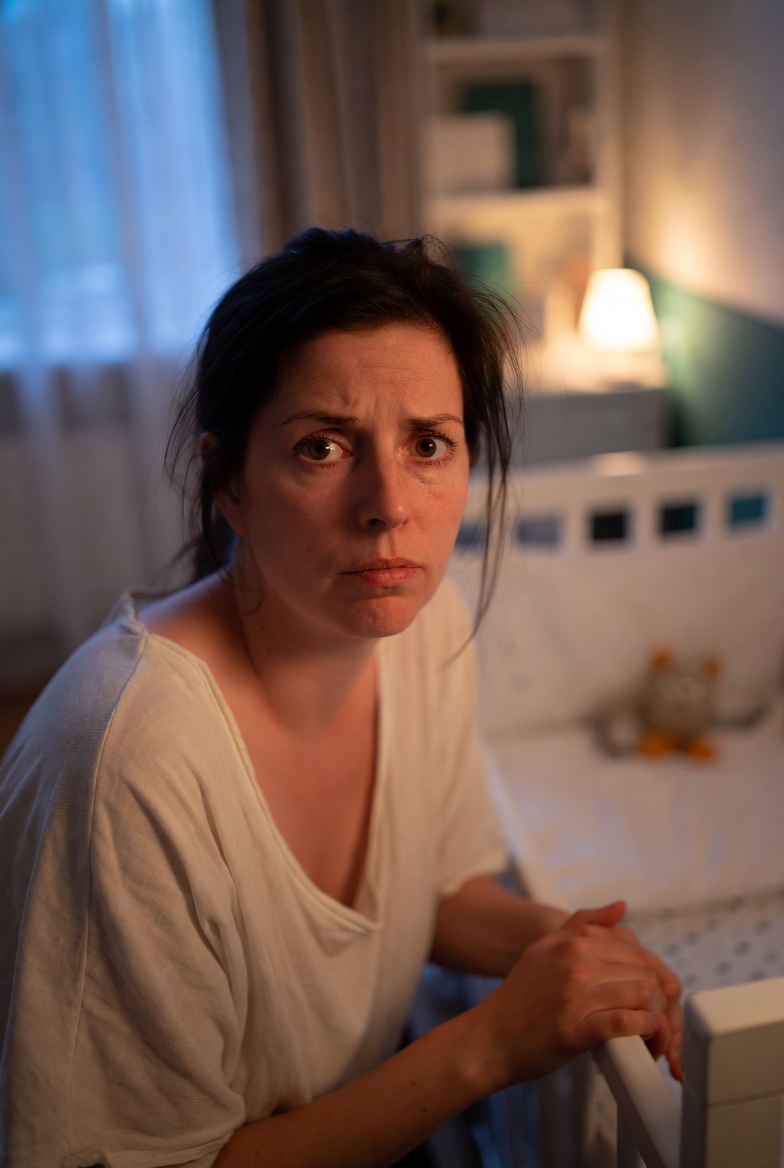
Each morning followed the same pattern. The 5am wake-up wasn't gradual. It was sudden \u2014 a jolt into consciousness with her heart already pounding, her chest tight, and a wave of physical dread moving through her body before her brain had assembled a single coherent thought. For the next forty minutes she would lie in the dark next to her sleeping husband, unable to get back to sleep, cycling through every possible thing that could go wrong that day. Parent complaints. Ofsted. A safeguarding referral. Staff sickness. A difficult conversation about capability procedures. The budget. The boiler. The Year 6 SATs results. The governor she was meant to email back last Thursday. The email she was meant to answer from County. The answer she didn't have to give the chair of governors about the deputy who wanted to resign.
By 6am she was downstairs, already on her laptop, already drinking coffee, already working. By 7:30am she was in the car, driving to school, crying quietly in the car park for two or three minutes before getting out and walking in smiling. By 8am she was in assembly, in front of 240 children and twenty-one staff, performing competence. By lunchtime she was functioning normally, almost well. By 3pm, as the staff started to leave, she was operating at roughly the level of a normal day. By 9pm she was back on her laptop, answering emails, planning tomorrow. By 11pm she was asleep. By 5am the cycle restarted.
She had not had a genuine day off in fourteen months. She had not had a morning without the 5am wake-up in about six.
This is what morning anxiety looks like when it's combined with chronic occupational burnout in someone who cannot, by the structure of their job, simply stop. And it is much more common in UK leaders \u2014 in education, the NHS, social care, and other high-responsibility professions \u2014 than the polished outside picture suggests.

From resilient to running on fumes
The morning anxiety didn't arrive in a single piece. It accumulated over roughly two years, each pressure adding to the last until the system gave way.
The first year of Lisa's headship had been genuinely exciting. She had inherited a school that was good but tired, and she had a clear vision for what it could become. She worked long hours because she wanted to, not because she had to. Her husband, a consultant, was used to demanding careers. The children were both in secondary school and independent enough not to need her around every evening. She thrived on the pace.
Year two is when the cracks started. A long-serving deputy left. Two experienced teachers retired. The replacements were good but new to the school, and Lisa found herself mentoring them while also doing most of the deputy's previous workload. Covid-era recovery pressures were still lingering \u2014 attendance was patchy, behaviour had deteriorated in some year groups, parents were more demanding than they used to be. A safeguarding case that had been brewing for months hit a crisis point in March and consumed the entire Easter half-term. The summer term brought SATs, the end-of-year reports, the leavers' events, and the staff appraisals she had deferred from Easter. She didn't take a full week off that summer.
By year three, she was the head of a school that looked, from the outside, like it was going well. From the inside, she was the thing holding it together with her own finite energy and nothing was being replenished. The Ofsted call could come any day. Two more teachers had handed in their notice. A difficult parent had escalated a complaint to the local authority. The staff expected her to be calm. The governors expected her to be strategic. The children expected her to be warm. The system expected her to be all of these things simultaneously, at all times, regardless of what was happening in her own life.
And somewhere in that third year, the morning anxiety started. At first it was occasional \u2014 a bad Monday, a Sunday night dread that lingered into Monday morning. Then it was most weekday mornings. Then it was every weekday. Then it was weekends too. By the time Lisa finally admitted something was wrong, the anxiety had become the soundtrack to her own life, playing constantly in the background, too loud to ignore and too embarrassing to explain.
The biologyThe cortisol awakening response \u2014 what was actually happening in her body
Before the cognitive techniques could do their work, Lisa needed to understand what was physically happening to her at 5am each morning. The short version: her stress hormones were waking her up in an alarm state, and then her brain was amplifying that alarm with thoughts about the day ahead.
The cortisol awakening response (CAR) is a real biological mechanism. Cortisol \u2014 the body's main stress hormone \u2014 naturally rises sharply within the first thirty to forty-five minutes after waking. This is not a pathological response; it is your body's way of transitioning from sleep to wakefulness, mobilising energy, and preparing you to meet the demands of the day. In a healthy system, the morning cortisol rise is proportionate and well-regulated. You wake up, you feel alert, cortisol returns to baseline over the morning, and by mid-morning your system is in a normal waking state.
In someone experiencing chronic stress, burnout, or an anxiety or depressive disorder, the CAR can become dysregulated. Sometimes it becomes exaggerated \u2014 producing the experience of waking in a flood of physical anxiety, racing heart, nausea, and dread. Sometimes it becomes blunted \u2014 producing exhausted, fog-like mornings with no capacity to get going. Both patterns are signs that the stress system has been running too hot for too long.
For Lisa, the exaggerated pattern was playing out every morning. Her body was primed, overnight, to expect threat. At around 5am, as her cortisol began to rise into its natural peak, it was crashing into an already-sensitised anxious system \u2014 and the result was the physiological alarm she was waking into.
What made it worse was the immediate cognitive response. The moment she was conscious, her brain started supplying threats. Every worry from the previous day. Every difficult task on today's schedule. Every worst-case scenario for the week ahead. The thoughts landed on a body that was already physiologically primed to treat them as dangerous. The catastrophic interpretations didn't just coincide with the physical symptoms \u2014 they amplified them, and the physical symptoms amplified the thoughts back, in a loop that kept her awake and in distress for an hour before she'd even got out of bed.
The practical implication: Understanding the CAR was genuinely helpful for Lisa. It meant her 5am terror was not evidence that something catastrophic was about to happen. It was a physiological pattern, happening regardless of what today's meetings actually held, and responsive to treatment. The dread was real. The events it was predicting were, mostly, not real. This separation \u2014 between the physiology and the thoughts \u2014 was where the recovery started.
What a 5am wake-up actually looked like
The cycle was reliable enough that Lisa could have described it as a sequence:
1. Sudden wake. Heart already racing. Hot. Chest tight. No transition from sleep \u2014 just awake and already in physiological alarm.
2. Immediate threat scan. The brain, primed by weeks of stress, begins searching for what's wrong. It doesn't find one big thing. It finds fifty small things. Every one of them feels, in that moment, critical.
3. Anticipatory cascade. Starts ticking through today's schedule. The governor meeting. The parent complaint. The class cover. The email to County. Each item triggers a fresh wave of physical anxiety. By minute five, she's lying in the dark with her heart racing harder than when she'd woken up.
4. Catastrophic predictions. The parent is going to escalate. The governor is going to lose confidence. The teacher is going to resign. The Ofsted inspection is going to be a disaster. I'm going to fail, publicly, in this job I've wanted my whole career. These aren't passing thoughts. They are stated internally with the force of certainty.
5. Failed attempts to sleep. She tries to doze. She tries to think about something else. She tries controlled breathing. Nothing works. The body is flooded with cortisol and adrenaline, and it is not going to let her go back to sleep.
6. Guilt spiral. Why can't I just sleep? I've got the biggest day of the week tomorrow. I'm going to be exhausted. I'm going to perform badly. It's going to be my fault. The guilt about being awake becomes another layer of distress.
7. Surrender to the day. By 5:45 or 6am, she gives up, gets out of bed, and goes downstairs to start working. The day, in practice, has already begun \u2014 she just hasn't officially acknowledged it yet.
The cognitive patterns running her stress
Like all anxiety presentations, Lisa's morning pattern was driven by specific cognitive distortions. The twist with burnout presentations is that these distortions often look, from the inside, like professional virtues. Conscientiousness. Responsibility. Standards. Care. This makes them particularly hard to challenge, because dismantling them can feel like dismantling the very qualities that made you good at your job in the first place.
Over-responsibility
The belief that Lisa was personally responsible for every outcome in her school. Child's behaviour spiralling? Her fault. Teacher struggling? Her fault. Parent dissatisfied? Her fault. Budget pressure from the local authority? Somehow her fault. This isn't what the job actually requires \u2014 heads are responsible for leading, not for single-handedly producing every positive outcome \u2014 but burnout thinking fuses leadership with omnipotence, and omnipotence with guilt when anything goes wrong.
Catastrophising
Every ambiguous signal resolved at the worst end of its possible meaning. A parent email was not a parent email; it was the start of a formal complaint. An Ofsted phone call was not a phone call; it was the beginning of the end of the school. A teacher asking for a meeting was not a meeting; it was a resignation in disguise. The brain skipped past the thousand mundane interpretations and landed on the catastrophic one every time.
Mind reading
Lisa was convinced she knew what her governors, her staff, and her LA thought of her \u2014 and it was always negative. "The chair of governors thinks I've lost control." "The LA thinks I'm out of my depth." "The staff are losing confidence in me." These assumptions felt like facts. They were based on almost no evidence \u2014 the people in her life repeatedly told her she was doing a good job \u2014 but mind reading is immune to the reassurance of others, because it treats internal conviction as proof.
Discounting the positive
Years of positive feedback, strong school performance data, successful Ofsted judgements from previous schools, and genuine affection from her staff were all dismissed whenever the anxiety spiked. "Yes, but that was before. Yes, but this role is different. Yes, but maybe they were just being polite." The positive evidence was always somehow rendered irrelevant, while the smallest negative signal was treated as the true picture.
"Should" statements
The burnout tax. I should be able to handle this. I should be coping. I should be more resilient. I should be in the office by 7am. I should answer emails within four hours. I should be available to staff at all times. I should not need help. Every "should" was an internal demand that carried punishment if unmet. Over time, the weight of the shoulds had become unsustainable \u2014 and admitting she couldn't meet them felt like admitting she shouldn't be a head teacher at all.
Perfectionism
The belief that performing the role "properly" meant performing it to a standard nobody could sustain. Not just leading the school, but leading it while never being seen to struggle, never taking a day off, never delegating anything important, and never, ever having a visible bad day. The perfectionism wasn't about being the best head teacher \u2014 it was about being a head teacher who never let the façade slip, regardless of what it was costing her privately.
What didn't workThe coping strategies that made it worse
Before she found treatment that worked, Lisa tried a number of strategies that either didn't help or actively deepened the spiral. Each felt sensible at the time.
Pushing through
Her first instinct was to white-knuckle it. "I just need to get to half term." "I just need to get through this week." "I just need to be stronger." Pushing through works for a short crisis. It does not work as a long-term strategy for a chronic stress response, because the strategy itself \u2014 suppressing the signals the body is sending \u2014 deepens the dysregulation. By year three, pushing through wasn't even working in the short term.
Caffeine to prop the mornings up
By the time she sought help, Lisa was drinking five or six coffees a day \u2014 strong, black, starting at 5:30am. Caffeine gave her the alertness she felt she needed to function. It also actively fed her anxiety, since caffeine raises heart rate and cortisol, which her already-dysregulated system read as further confirmation that something was wrong. The alertness she was buying in the morning came at the cost of worse anxiety by mid-afternoon.
Wine to take the edge off in the evenings
Two large glasses most weeknights. Three at weekends. The wine did what it was asked to do in the evening \u2014 softened the edges of the day, let her feel like a person again, let her watch half a TV programme without checking emails. What she didn't fully clock was that alcohol, even moderate amounts, significantly disrupts sleep architecture and worsens the cortisol awakening response the following morning. The wine that helped her cope in the evening was making her 5am wake-up worse.
Working more to feel in control
When the anxiety spiked, Lisa's instinct was to work harder \u2014 more emails, more planning, more showing up. The work was functioning as a safety behaviour. It gave her temporary relief from the anxious feeling that she wasn't doing enough. It also prevented her from ever resting long enough to actually recover, creating a doom loop: anxious \u2192 work more \u2192 more exhausted \u2192 more anxious \u2192 work more.
Telling nobody
Her husband knew she was tired. He did not know she was crying in her car most mornings. Her friends knew she was busy. They did not know she was waking at 5am in terror. Her deputy knew she was under pressure. She did not know Lisa was in clinical burnout. The isolation was driven partly by shame ("I'm the head teacher, I'm supposed to be the one holding it together") and partly by the protective instinct of many high-functioning people: she did not want the people she loved to worry about her. The result was that she was carrying something that would have been twenty percent lighter if shared, alone.
Googling at 3am
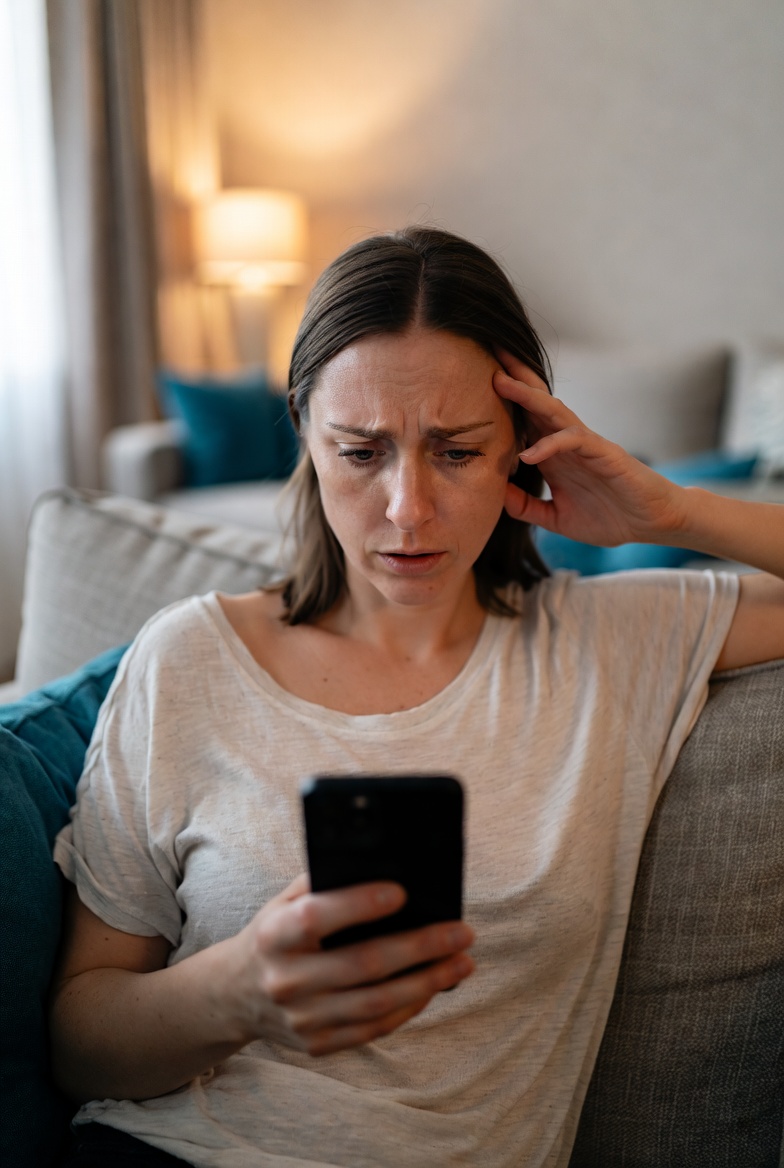
When the insomnia was at its worst, Lisa would reach for her phone and read articles about teacher burnout, head teacher mental health, Ofsted stress, and workplace stress more generally. She told herself this was research. It was actually a form of doom-scrolling that kept her brain activated, raised her cortisol, and made the insomnia worse. The information she gathered added material for the next spiral without reducing any of the underlying pressure.
The turning pointThe morning she couldn't get out of the car
The moment that finally broke the pattern was quiet and slightly embarrassing, the way these moments often are. It was an ordinary Wednesday in late October of her third year as head. She had driven to school as usual. Parked in her usual spot. Sat in the driver's seat, keys still in the ignition, and found she couldn't make herself open the door.
She wasn't having a panic attack. She wasn't crying. She was just, physically, unable to initiate the next movement. The thought of walking into the building was so aversive that her body had simply refused to proceed. She sat there for what she later calculated was nearly twenty minutes, watching colleagues and children arrive, intellectually telling herself to get out of the car, and finding that the instruction didn't translate into action.
She eventually went home. She rang her GP from the car and got a phone appointment for that afternoon. By 2pm she was on her sofa, for the first time in months, with a sick note in her hand saying "work-related stress" and a referral to NHS Talking Therapies sitting in her emails. The GP had also referred her to her school's occupational health service, recommended she take at least four weeks off immediately, and used the word "burnout" out loud.
Lisa had been waiting for permission she hadn't known she was waiting for. Hearing a clinician say "this is a clinical presentation of burnout, you need time off, and you need treatment" was, itself, the first bit of the treatment.
How Lisa broke the loop
What follows are the specific techniques Lisa used over the next ten weeks. She took six weeks off work, did four weeks of phased return, and worked weekly with a CBT therapist throughout. The techniques are deliberately practical \u2014 morning anxiety and burnout don't respond to insight alone; they respond to structured behavioural change.
1 Not touching the phone for the first hour
The single biggest morning change. Lisa removed her phone from the bedroom entirely, replaced it with a traditional alarm clock, and set a rule: no phone for the first hour after waking. No emails, no news, no scrolling. This was hard at first \u2014 she had been starting her working day at 5:15am for years, and her nervous system was conditioned to check. But within a week, the absence of the phone was noticeably reducing the intensity of her morning anxiety. The phone had been functioning as an immediate threat-delivery system.
2 Getting out of bed rather than ruminating
A core principle of CBT-I (CBT for insomnia): if you've been awake for twenty minutes and can't get back to sleep, get up. Staying in bed awake teaches your brain that the bed is a place for rumination. Instead, Lisa would get up at the first sign of sustained insomnia, go downstairs, read a paper book (not a screen) in a low-lit room for thirty minutes, and only return to bed when genuinely sleepy. This broke the association between her bed and her anxiety.
3 A structured morning routine that wasn't work
Between roughly 5:30 and 7am, Lisa had a fixed sequence that had nothing to do with school. Water. Ten minutes of slow stretching. Shower. Breakfast \u2014 not skipped, not eaten at her laptop, actually eaten at the kitchen table. Twenty minutes of a walk outside in daylight, regardless of weather. Only then, at roughly 7:30am, could she open her email. The routine replaced the old ritual of instant work with a ritual of regulation. It allowed her cortisol awakening response to run its natural course and settle without her feeding it more stress.
4 Grounding techniques for the acute moments
When the 5am wake-up was particularly intense, Lisa used two physical interventions. Cold water on her face, which activates the dive reflex and reliably reduces heart rate within seconds. Box breathing (four seconds in, four hold, four out, four hold, repeat six times), which downshifts the autonomic nervous system from sympathetic to parasympathetic dominance. These didn't eliminate the anxiety. They created a window of calmness in which the cognitive techniques became possible.
5 Worry scheduling
Lisa kept a notepad by the bed. When the 5am thoughts arrived, she wrote them down \u2014 every single one \u2014 and then told herself: "I'll think about these at 4:30pm today." She then did her best not to engage with them again until 4:30pm. Most of the time, by 4:30pm, half the worries on the list had resolved naturally, a quarter seemed trivial, and only a few needed genuine attention. This technique did not eliminate the 5am wake-up. It stopped it escalating into ninety minutes of spiralling rumination.
6 Dismantling the "shoulds"
In therapy, Lisa began identifying her "should" statements and examining them. "I should answer emails within four hours." Says who? Where is that written? What would actually happen if I answered them by 5pm the next day? "I should be available to my staff at all times." Says who? What happens to a system where one person is always available \u2014 do they build their own problem-solving capacity? "I should never be seen to struggle." Who taught me that? Is that what I want modelled to my own staff? Every "should" that survived interrogation could stay. Most didn't survive interrogation.
7 Formal boundaries, written down
Lisa and her therapist co-wrote a set of explicit boundaries that were non-negotiable. No emails after 6pm. Phone off on weekends except in genuine emergencies. One full day off in every holiday week, minimum. Lunch break eaten away from her desk, every day. She gave the list to her deputy and chair of governors so they could hold her to it. The boundaries looked, on paper, like luxuries. They were actually the bare minimum operating conditions for a sustainable career. She had simply never written them down before.
8 Reducing caffeine and alcohol
Not to zero, but significantly. Coffee: two a day, none after 11am. Alcohol: no more than three small glasses a week, none in the two hours before bed. These felt punitive at first \u2014 the wine had been functioning as her only reliable decompression. Within three weeks, her sleep had improved more than any other single intervention, and her morning anxiety was measurably reduced. The stimulants and depressants had been making both problems worse.
9 Values clarification (an ACT technique)
Her therapist asked: "Setting aside what you feel you should do, what kind of school leader do you actually want to be?" Not the perfect one. The real one. Lisa identified: warm, fair, decisive, calm, visible to her community, and able to go home at a reasonable hour and be present with her family. Any action that fitted those values was worth doing. Any action that didn't \u2014 even if it satisfied a "should" \u2014 was worth questioning. This reframing, borrowed from ACT, gave her a compass that had nothing to do with performing omnipotence.
10 Stop The Loop for the acute mornings
In the early weeks of her recovery, the 5am wake-ups were still happening. On the bad mornings, Lisa used the app's emergency spiral mode. The AI guided her through grounding, identified which cognitive distortions she was running, and reminded her of the written evidence she'd built up that her 5am predictions were not reliable forecasts of her day. It acted as external scaffolding for the CBT skills while they were still becoming automatic. Over time, she needed it less. She continued to use the daily mood-tracking feature even after recovery, because it gave her early warning signs when the old patterns started to creep back.
The return to school
Lisa returned to work on a phased basis \u2014 two days the first week, three the second, four the third, and full-time from week four \u2014 following an occupational health plan that the LA had agreed and her chair of governors had signed off. Crucially, she did not return to the same role in the same way. The hours were protected. The boundaries were formal. The deputy had taken on some responsibilities permanently. She had a standing weekly check-in with her chair of governors that was specifically about her wellbeing, not about school operations.
Most importantly, she returned having publicly named what had happened. At the first staff meeting of her return, she said: "I've been off for six weeks with work-related stress and burnout. I want to be honest with you about this because I think it matters for our whole profession that head teachers can say this out loud." The staff response was overwhelming. Three teachers told her privately afterwards that they were also struggling. Two parents wrote supportive emails. One governor sent her a book. And one deputy from a neighbouring school rang her the next week to ask how she had got help, because she suspected she was heading the same way.
The breakthrough wasn't that the anxiety disappeared. It hasn't, entirely \u2014 Lisa still has the occasional 5am wake-up on stressful weeks, and the role itself has not got easier. The breakthrough was that the anxiety had stopped being secret, and therefore stopped being shameful, and therefore stopped being uncontainable.
Where Lisa is nowTen weeks later, ten months later, and beyond
At the end of ten weeks, Lisa was sleeping seven hours most nights. The 5am wake-ups had reduced by about seventy percent in frequency and, when they did happen, were significantly less physically intense. She was drinking two coffees a day, most of a small glass of wine a week, and cooking dinner at home four nights out of five. She had taken two genuine weekends off in a row for the first time in years.
Ten months later, she is still in post as head teacher. The school is performing well. She has taken a proper summer holiday. Her deputy has grown into more responsibility and is now a genuine partner rather than an understudy. Lisa has reduced her working hours without reducing her effectiveness \u2014 if anything, her decisions are better because they are made by a rested brain. The morning anxiety has not completely vanished; it emerges occasionally under real pressure, and it no longer controls her life. The techniques have become automatic \u2014 grounding, worry scheduling, the morning routine, the firm boundaries.
The other thing that has changed is her visibility. She now talks openly about her burnout experience with new heads, with her own staff, and with her LA. She has given two talks to trainee head teachers about sustainability in leadership. She has helped three colleagues, in her own school and in others, recognise their own early signs and seek help sooner than she did. The suffering she went through privately has become something useful to her profession publicly.
If you're in education and recognise yourself in this
This case study has focused on Lisa. But if you are reading this at 6am on a Monday morning having not slept properly for weeks, please know: this is a recognised pattern in UK education, and there is help specifically for you.
Education Support is a free, confidential helpline for everyone working in UK education \u2014 teachers, heads, support staff, early years, further education, higher education. It is staffed by qualified counsellors who understand the sector. The helpline is open 24 hours a day, seven days a week, and you don't need a referral or a diagnosis to call. Number: 08000 562 561. Website: education-support.org.uk. You can also book a free six-session course of telephone counselling through them if you need more sustained support.
Your GP can sign you off work, refer you to NHS Talking Therapies for free CBT, and rule out physical causes (thyroid issues, for example, can mimic burnout). A "work-related stress" sick note is a legitimate medical sign-off, not an admission of weakness. If you need it, take it.
Occupational health is underused by school staff. Most local authorities offer OH referrals, and most MATs and independent schools have OH services on contract. An OH assessment can formalise workplace adjustments and provide medical weight to conversations with your employer about workload.
Your union \u2014 NEU, NASUWT, ASCL, NAHT, Voice \u2014 has wellbeing resources and can advise on capability procedures, workload grievances, and protected time.
Peer support matters. If you're a head, other heads understand this. If you're a classroom teacher, other classroom teachers do. Senior leadership can be especially isolating precisely because you feel you must protect the people below you from seeing you struggle. You don't have to. The most helpful thing a head teacher can do for their profession is model that it's okay to be human.
The school will survive if you take a week off. This is one of the hardest things for people in education to believe. The school will survive. The children will be fine. Your deputy will cope. The parents will manage. The work you're currently doing at 5am is not worth your health.
For partners and familiesIf someone you love is in burnout
Supporting a partner who is in burnout is exhausting and often confusing. They may look fine. They may insist they're fine. They may resist every suggestion you make to help. Some things that are genuinely useful:
Notice the physical signs rather than just asking how they are. Are they sleeping? Are they eating? Are they withdrawing from things they used to enjoy? Are they crying in private places (cars, showers, late evenings)? These are more reliable indicators than asking "are you okay?" and getting "I'm fine."
Make the GP appointment easier, not harder. Sometimes the barrier is just the friction of booking. Offer to sit with them while they book. Offer to drive them. Don't make it a thing. Make it the thing that happens this week.
Don't take the withdrawal personally. People in burnout often have nothing left to give to their closest relationships. This is painful and it is not permanent. Absorbing the impact without retaliating is one of the most loving things you can do.
Protect their rest actively. If they've agreed to take a day off, handle the logistics so they actually get to rest. Take the kids out. Make the food. Answer the phone. The rest has to actually happen, or it doesn't count.
Look after yourself. Being the partner of someone in burnout is its own burden. You are allowed to find it hard. You are allowed to need support of your own. Mind (mind.org.uk) has resources for family members of people experiencing mental health difficulties.
Key takeawaysWhat Lisa's story teaches us
Morning anxiety is a physiological pattern, not a prediction of your day. The cortisol awakening response is a real biological mechanism, and it can be dysregulated by chronic stress. Understanding this is the first step toward treating it rather than fearing it.
Burnout is a clinical presentation, not a character flaw. It has a recognisable cluster of symptoms, it is more common in high-responsibility professions than any of us pretend, and it is treatable. The profession you work in does not make you immune \u2014 often it makes you more vulnerable.
Pushing through is not a long-term strategy. It works for a short crisis. It does not work for a chronic stress response. The longer you push through, the deeper the dysregulation and the longer the recovery.
Leadership is not omnipotence. The "shoulds" of senior leadership \u2014 always available, never struggling, always coping \u2014 are not actually part of the job description. They are inherited expectations that can be unlearned.
Taking time off is not failure. Taking time off is what allows the role to be sustainable. Heads who take their holidays and protect their hours tend to last; heads who don't, don't.
Modelling honesty helps your whole organisation. When a leader says out loud "I've been struggling and I got help," it gives everyone else in the building permission to do the same. The suffering becomes useful instead of only painful.